

 Tiếng Việt
When it comes to insulated bags, most people already understand their core function – keeping food and beverages at the right temperature to prevent spoilage and protect health. But when it comes to which specific fabrics and materials are used in the manufacturing of insulated bags, many people are still in the dark. In this article, let’s explore together with Hop Phat the most popular fabric materials that bag-making workshops favor when sewing insulated bags.
Materials Commonly Used to Manufacture Insulated Bags
Exterior Materials of Insulated Bags
Because material is one of the most important criteria determining the durability of a bag, to achieve a long-lasting insulated bag product, you should carefully consider high-quality fabric options. In particular, bags made from thick, sturdy fabrics with good waterproofing properties are the perfect choice. Below is a list of the basic fabric materials most commonly selected for manufacturing insulated bags.
1. Polyester Fabric
Polyester fabric is woven from synthetic poly-nylon fibers that are drawn, woven, and interlocked to form a solid structure. As a result, this fabric has high physical thickness and durability, and resists stretching and wrinkling even after extended use. Because the fibers are woven tightly together, this fabric offers excellent waterproofing and strong resistance to abrasion and environmental damage.
Beyond these core functions, polyester also has the ability to limit air circulation, resist dust and wind, and provide good antibacterial properties – reducing the risk of food spoilage and hygiene issues.
That said, polyester does have a few drawbacks: it is highly flammable when exposed to direct heat (such as open flame), and it deteriorates easily in extremely high-temperature environments.
Despite these limitations, polyester remains the most widely used material for manufacturing insulated bags – as well as backpacks and handbags – thanks to its many benefits and its affordable, competitive market price.
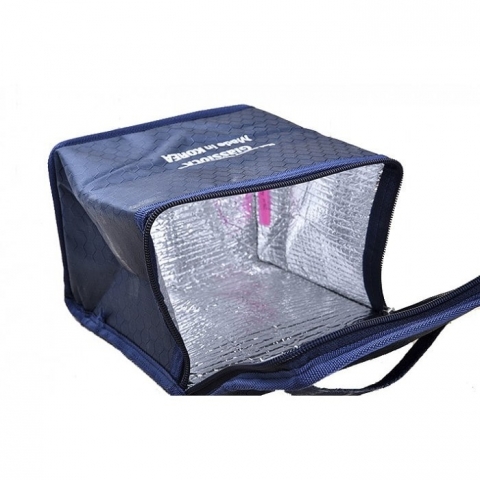
2. Canvas Fabric
When canvas fabric is used to manufacture insulated bags, both sides of the fabric are laminated with a PU or PVC coating (the thickness of the coating varies depending on the intended use). For insulated food bags, the canvas is coated thickly on both sides to enhance heat retention and waterproofing, minimizing food spoilage and deterioration.
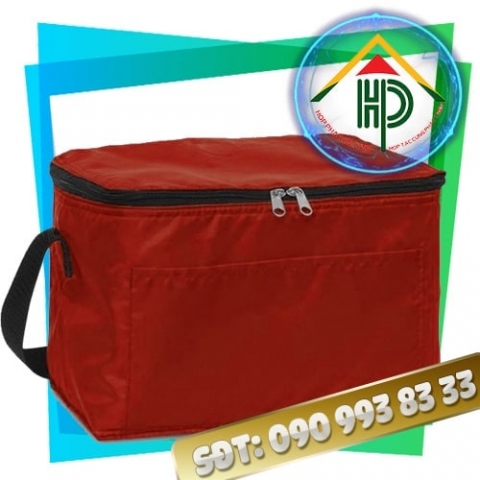
There are two common types of canvas fabric used to make insulated bags for office lunches and water bottle carriers: 600D canvas and 420D nylon canvas. The 600D canvas has a slightly rough outer surface that tends to attract dust, while the 420D nylon canvas has a glossier, smoother surface with better waterproofing and dust resistance. These two canvas types have similar thickness but differ in surface texture – workshops choose between them depending on the intended purpose and target users.
However, despite being laminated with PU or PVC, canvas fabric still has comparatively weaker waterproofing than materials such as polyester, nylon, or laminated woven PP. This is because canvas is naturally made from 100% hemp fiber with a more loosely woven structure that has inherently absorbent properties.
3. Laminated Woven PP Fabric
Insulated bags made from polypropylene (PP) fabric are woven in both directions (lengthwise and crosswise), then laminated with a matte or glossy OPP film. Because it originates from polypropylene plastic material, this fabric is quite lightweight, dry, and breathable. It also has good load-bearing capacity due to the tightly cross-woven PP fibers.
Laminated woven PP insulated bags are highly durable, with strong mechanical resistance, excellent waterproofing, and high impermeability. Furthermore, thanks to their relatively low cost and the ease of printing on the laminated surface, this material is a popular choice for businesses looking to use insulated bags as promotional items – serving as highly effective and long-lasting outdoor advertising tools.
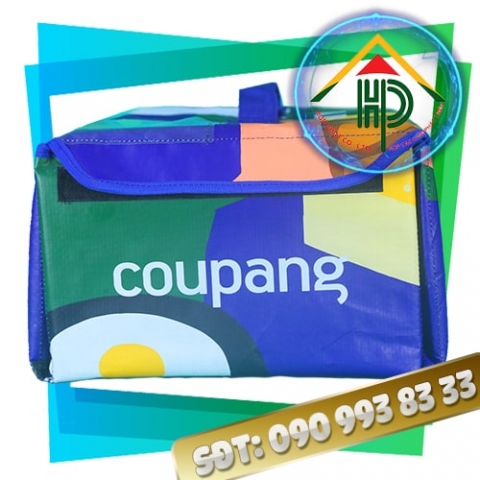
However, like many other materials, woven PP fabric is flammable. To ensure the longevity of bags made from this material, store them in dry, well-ventilated areas and keep them away from fire or excessive heat.
4. Non-Woven Fabric
Non-woven fabric has high elasticity and good load-bearing capacity due to the properties of synthetic plastic granules. With a composition of 100% polypropylene, non-woven fabric is commonly used to manufacture simple insulated bags that keep hot or cold food at temperature for short periods.
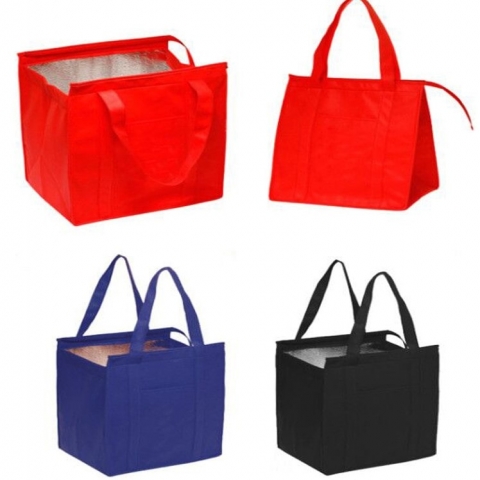
Non-woven fabric is easily biodegradable and flammable, and while being environmentally friendly is one of its advantages, it is also one of its limitations when used for insulated bag manufacturing. As a result, these bags cannot be used effectively over a long period of time – especially when exposed to moisture, where the fabric becomes less durable and prone to deterioration.
5. Nylon Fabric
Nylon fabric is a premium, highly breathable material. It is highly durable and offers long-lasting use. In particular, using nylon fabric to manufacture insulated bags limits dust accumulation and water absorption, keeping food dry and fresh.

Insulated bags made from nylon fabric have outstanding advantages: they are convenient, reusable, and able to bear significant weight. Additionally, because nylon is lightweight yet load-bearing, manufacturing workshops also favor it for making insulated bags. However, because it is made from synthetic fibers, nylon is not environmentally friendly.
Interior Materials of Insulated Bags
While the exterior material matters greatly, the interior lining of an insulated bag is equally important for keeping food and beverages at the right temperature. Currently, there are two main types of interior lining materials commonly used by sewing workshops:

Silver foam insulation lining: Made from PE foam materials through a high-grade thermalization process, the insulating foam layers bond together tightly with very good elasticity. By combining a moderately thick foil layer with a highly elastic foam layer, this lining provides excellent heat retention and shock resistance. It is characterized by a thick foam layer and an aluminum foil surface with raised embossed patterns.
Silver PEVA aluminum anti-heat foam: This type of foam has 3 layers – the two outer layers are silver PEVA aluminum, and between them is a thin layer of batting. The combination of these layers gives the bag excellent heat retention. It is characterized by a thinner foam layer with a smooth-printed aluminum surface.
Conclusion
The above covers the materials most commonly used to manufacture insulated bags. We hope this information is truly helpful so that you can make the right choice when selecting an insulated bag that suits your needs. If you have any questions or wish to place a custom order, please contact Hop Phat directly at hotline 0909 938 333 or visit https://mayhopphat.com for more details.