

 Tiếng Việt
Surprisingly, most of us have only heard of linen but don’t know much about it — yet it is one of the most widely used woven fabrics in the world. It was once so common that it predated the cotton era and preceded the age of synthetic materials.
Linen was once so precious that it was used to wrap mummies in ancient Egypt, helping preserve those ancient treasures. Today, linen is used to make clothing, curtains, tablecloths, pillows, rugs, ropes, and more. It is also blended with cotton to create a stiff, paper-like material used to make dollar bills. Let’s join Hop Phat Sewing in learning more about linen — a soft, highly popular fabric today.
What Is Linen Fabric? Composition
Linen (English name: Linen) is a fabric made from flax fibers. The flax plant has been cultivated in most countries around the world and has been used to make thread for more than 6,000 years. To extract the fibers, the plant is cut or pulled by hand from the ground (pulling is said to produce finer fibers).

The seeds are then removed through a process called rippling, followed by retting — soaking the stalks to separate the plant matter from the fibers. Once the fibers are separated to collect the longest segments — up to 20 cm in length — they are spun into yarn and finally woven into fabric.
Applications of Linen Fabric in Everyday Life
Linen in History
In ancient Mesopotamia, people already knew how to grow flax plants and use them to make fabric. However, it was largely reserved for the nobility and upper classes.

The wrapping seen on Egyptian mummies is precisely linen made from the flax plant. It was also used for traditional everyday garments in the region.
Archaeologists once discovered a piece of dyed linen in a cave, and after analysis, it was determined to be approximately 36,000 years old — proving that linen is one of the earliest fabrics ever created.
In 1881, when the tomb of Pharaoh Ramses II was discovered, linen found there was still in pristine condition despite being more than 3,000 years old.
The mummies of “Kaboolie” — daughter of an Ammon priest — and the tomb of Tutankhamun also contained linen in perfect condition, demonstrating the exceptional durability of flax-based fabric.
The earliest written records of linen date back more than 4,000 years in Egypt. These records were written in the syllabic script Linear B at Pylos, Greece, where linen appeared in hieroglyphic form as “li-no,” while female weavers were called “li-ne-ya.”
By the 12th century, records emerged of trade between Phoenician merchants and Mediterranean peoples, alongside mentions of flax cultivation and linen-making in Ireland dating back to before the common era.
In 1685, when the Edict of Nantes was revoked, many Huguenots fled France to the British Isles. Among them was Louis Crommelin, the finest linen weaver from the town of Cambrai. He eventually settled with his family in Lisburn — about 10 miles from what would become the most famous linen production center of its era. The name “Linenopolis” emerged during the Victorian era, when linen production reached its peak volume.
During World War I, Louis Crommelin pioneered improvements to the weaving industry, and in recognition of his contributions to linen textile development, he was appointed to oversee the growth of the linen weaving sector. His efforts culminated in 1711 with the establishment of the Board of Trustees of the Linen Manufacturers of Ireland.
Linen Today
Linen is still used for many of the same purposes as throughout history, but it now makes up a significantly smaller share of the global textile market. Many of its original applications — such as shirts and trousers — have largely been replaced by cotton.

Linen in the Fashion & Clothing Sector
In hot climates, particularly in Vietnam, linen is widely used to produce everyday clothing in large quantities. Those living near equatorial regions benefit from linen’s high moisture absorption and low moisture retention, as well as its naturally white color that reflects heat-producing sunlight.
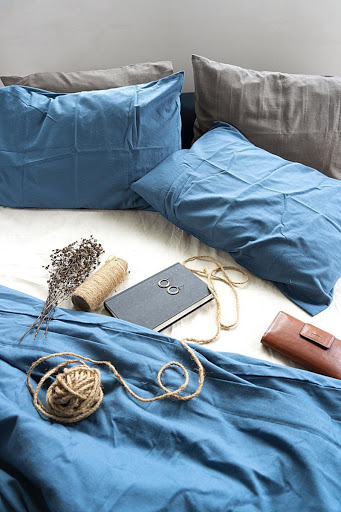
Linen is also one of the coolest fabrics available, which is why many people choose it for loungewear and sleepwear — it is cool, soft, and comfortable to wear.
Manufacturers can use linen to produce practically anything commonly made from cotton or wool — shirts, trousers, skirts, dresses, jackets, coats, vests, and many other casual and formal garments. Linen blends can also be used to make tote bags and everyday handbags.
Additionally, linen remains a popular material for undergarments and lingerie, and it is frequently used in nightgowns and robes.
Linen Beyond the Fashion Industry
Linen remains popular as a household material. Napkins and tablecloths made from linen are especially common, and while cotton is more widely used for bath towels today, you can also find hand towels, kitchen towels, and bath towels made from linen.

Bed linen — including pillowcases and bed sheets — is also commonly made from linen. One major advantage is its durability; higher thread counts can be achieved in linen compared to cotton without compromising strength. One of linen’s rare industrial uses is in the production of canvas for painting.
Common Types of Linen Fabric Today
Although all types of linen originate from processed and spun flax fibers, there are 4 main weaving techniques that produce different varieties, along with some blended materials listed below:
Damask Linen (Floral Brocade) Damask linen is elaborately and intricately decorated, woven on a jacquard loom to produce results similar to embroidery. It is not designed for everyday use and is more commonly found in decorative items.
Plain-Woven Linen (Huck / Huckaback) Plain-woven linen is used to make dish towels, terry cloths, and hand towels. It is woven relatively loosely yet remains highly durable.
Loosely Woven Linen Loosely woven linen has high absorbency but is the least durable type of linen. It is commonly used to make reusable diapers and sanitary pads.

Sheeting Linen (Plain-weave Linen / Vải Đũi) Items and garments are often made from sheeting linen due to its smooth surface, soft texture, and tight weave. This type of linen typically has a higher thread count than other varieties.
Sheeting linen is commonly used to make bed linen sets — sheets, pillowcases, and duvet covers — and can also be used for home loungewear.
Silk Linen (Linen-Silk Blend) Silk linen is a blended fabric combining linen and silk — two soft, cool materials — making it highly popular for its excellent moisture absorption. Silk linen is currently very fashionable for making áo dài (traditional Vietnamese dresses) due to its blend of classic and modern qualities.
Characteristics of Linen Fabric
Advantages of Linen
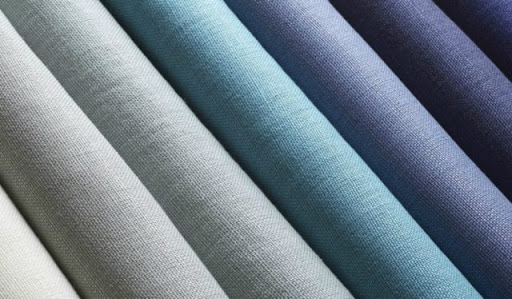
- Linen is 2–3 times stronger than cotton and dries much faster. Due to its porous nature, it has natural heat and moisture dissipation properties, making it an excellent heat conductor and a popular fabric for summer clothing and bedding.
- Natural fibers hold dye better than many other materials, so linen is available in virtually every color.
- Linen fabric is cool and lightweight, with a smooth surface that provides a comfortable feel for the wearer.
- It is also naturally antibacterial, which made it a popular choice for wound dressings for centuries, and it remains favored for treatment methods and accessories such as pressure pillows.
Disadvantages of Linen
- Poor elasticity means it tends to wrinkle easily.
- It is more expensive than cotton. Despite these drawbacks, linen remains a smart and popular choice for home décor accessories — just as it was when first discovered centuries ago.
How to Care for Linen Fabric Effectively
Linen is famously prone to wrinkling. If you enjoy the look and feel of linen clothing, be prepared to iron frequently if you want to keep it smooth — unless you prefer the natural wrinkled look. Using your iron on high heat followed by a little starch spray (especially on collars) will help achieve a crisp, smooth result.

Linen rarely stays perfectly flat — once you put on a linen outfit, it will inevitably wrinkle a bit. If you want completely wrinkle-free results, try linen blend fabrics, which tend to be much smoother.
Make sure linen clothing is completely dry before wearing, as wrinkles can become even more pronounced when the material is damp.
Current Pricing of Linen Fabric
Linen fabric is reasonably priced and suitable for a wide range of customer budgets. Prices vary depending on the type, and it is typically sold by the meter or by the kilogram. Meter-priced varieties (such as damask linen and sheeting linen / vải đũi) tend to be priced higher than standard linen.
Given its many properties and uses, standard linen fabric typically costs around 70,000 VND per kilogram. If you buy in bulk (wholesale), prices will be significantly lower than this average.
Where to Buy Linen Fabric?
Linen is widely available, and most fabric wholesalers carry a variety of linen types. For wholesale purchases, visit a wholesale fabric warehouse — for example, the linen wholesale warehouse on Street 45, District 7, Ho Chi Minh City. You can also find good prices at fabric markets such as Soai Kinh Lam Market and Kim Bien Market in District 5, or Phu Tho Hoa Fabric Market in Tan Phu, Ho Chi Minh City.

You can also browse fabric prices and products online via social media platforms or e-commerce sites like Shopee and Lazada if visiting in person is inconvenient.
Frequently Asked Questions About Linen Fabric
What is linen fabric? Linen is a fabric made from the bark, bast fibers, or threads of the flax plant.
What is linen fiber? Linen fiber is a type of bast fiber ranging in length from approximately 25 to 150 mm, with an average diameter of 12 µm to 16 µm.
What are the most common uses of linen fabric? Linen is commonly used to make bed linen, tablecloths, napkins, and clothing.
What is the standard unit of measurement for linen fiber? The standard unit specific to linen fiber is the “lea.”
What are the advantages of linen fabric? Linen has a natural sheen, high durability, is hypoallergenic, and is environmentally friendly.
Conclusion
The above covers key information about linen fabric. We hope this has provided you with useful knowledge about this highly functional material.