

 Tiếng Việt
In the current diverse fabric fiber market context, buying blended or poor-quality jute fabric is hard to avoid. To help you become a smart consumer, Hop Phat Fashion Jute Bag Manufacturing will provide the most detailed and accurate way to identify real jute fabric, protecting your rights and ensuring product quality.
1. The Problem of Fake Jute Fabric on the Market
Currently, the jute fabric market is witnessing the increasing appearance of poor-quality and counterfeit jute bag products. These products are often blended with synthetic fibers like polyester or polypropylene to reduce production costs.

Fake jute fabric not only loses its inherent natural properties but may also contain toxic chemicals. This is especially dangerous when products come into direct contact with food or human skin. Hop Phat Manufacturing has recorded many cases of customers experiencing skin irritation from using poor-quality jute fabric products.
2. Harmful Effects of Poor-Quality Jute Fabric
Poor-quality jute fabric can cause many serious harms:
- Health-wise: Chemicals in fake jute fabric can cause skin irritation, allergies, even respiratory diseases
- Environmental-wise: Synthetic fibers cannot biodegrade, causing long-term environmental pollution
- Economic-wise: Poor durability products, easily damaged, requiring constant replacement

3. Benefits When Using Real Jute Fabric
Conversely, real jute fabric brings many superior benefits:
Natural jute fabric has high durability, good anti-static properties, and effective moisture absorption. Especially, this material is 100% biodegradable, contributing to environmental protection. According to Hop Phat Manufacturing research, products from real jute fabric have a lifespan 3-4 times longer than similar products made from fake jute fabric.

II. Understanding Real Jute Fabric – Basic Knowledge
1. What Raw Material is Jute Fabric Made From?
Jute fabric is woven from jute fibers, a type of natural fiber originating from jute plant stems. Jute plants belong to the Malvaceae family, mainly grown in tropical countries like Bangladesh, India, and some areas in Southeast Asia.

The jute fabric production process starts from harvesting jute plants when mature. Plant stems are soaked in water to separate fibers, then jute fibers are cleaned, dried, and woven into fabric. This entire process is completely natural, not using toxic chemicals.
2. Popular Types of Jute Fabric
Currently on the market there are three main types of jute fabric:
White jute (Corchorus olitorius): This is jute fabric with naturally bright color, softer fibers than other types. White jute is often used for food storage bags and premium products.

Tossa jute (Corchorus capsularis): This type has characteristic brownish-yellow color, high durability, and long fibers. Tossa jute is most preferred due to superior quality and good abrasion resistance.
Mesta jute: This is a hybrid fabric between white jute and Tossa jute, with neutral colors and balanced properties between the two above types.
3. Outstanding Characteristics of Natural Jute Fabric
Natural jute fabric possesses many unique characteristics that fake jute fabric cannot imitate:
| Characteristic | Real Jute Fabric | Fake Jute Fabric |
|---|---|---|
| Surface | Naturally rough | Abnormally smooth |
| Durability | High, good load-bearing | Low, easily torn |
| Smell | Light jute plant smell | Chemical smell |
| Water absorption | Absorbs quickly | Absorbs slowly or doesn’t absorb |
| Elasticity | Little elasticity | Much elasticity |
III. 7 Effective Methods to Identify Real Jute Fabric
1. Method 1: Visual Inspection
Observing fabric surface is the simplest way to identify real jute fabric. Natural jute fabric has a characteristically rough surface with small unevenly distributed fibers. You can see fiber knots and weave marks not completely uniform.
The color of real jute fabric usually has brownish-yellow or natural beige tones, not too bright or too dark. Fake jute fabric often has abnormally uniform color or unnatural shine.
The fiber structure of real jute fabric can be observed with the naked eye. Real jute fibers have different lengths and are woven in a sparse pattern, creating natural air holes.
2. Method 2: Hand Touch Sensation
Tactile sensation is one of the most effective ways to distinguish real from fake jute fabric. When touching real jute fabric, you will feel the characteristic roughness, not soft and smooth like other fabric types.

The thickness of real jute fabric is usually quite significant and has certain weight. Fake jute fabric is often thinner and lighter than real fabric.
A small tip from Hop Phat Manufacturing: Grasp a piece of fabric tightly in your hand for a few seconds, then release. Real jute fabric will maintain shape longer and wrinkle less than fake fabric.
3. Method 3: Water Absorption Test
Water absorption test is a scientific and reliable method to identify real jute fabric. Natural jute fibers have very good water absorption due to their porous structure.
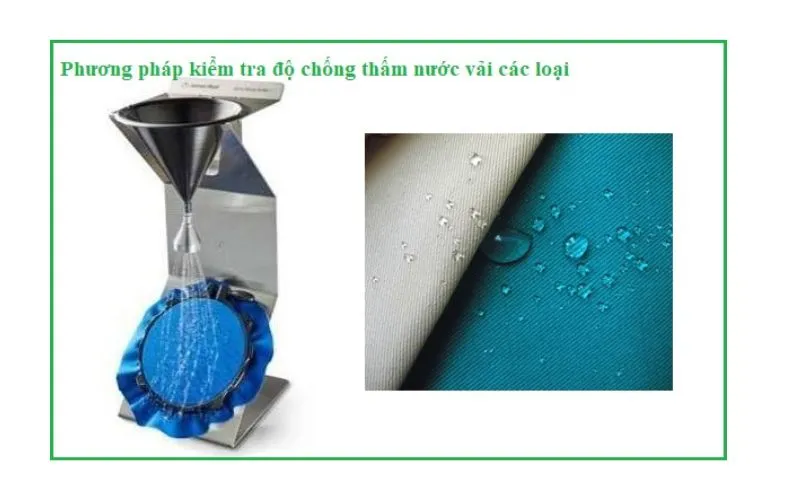
Implementation: Drop a few drops of water on the jute fabric surface. Real jute fabric will absorb water quickly within 5-10 seconds. Water will spread and penetrate deep into fabric fibers.
Expected result: Fake jute fabric often contains synthetic fibers, so water absorption is much poorer. Water may pool on the surface or absorb very slowly.
4. Method 4: Fire Test (Use with Caution)
Burn testing is the most accurate method to determine jute fabric composition. However, this method needs to be performed carefully and safely.
Safety preparation: Perform in a well-ventilated area, prepare water to extinguish fire if needed. Only burn a small piece at the fabric corner.
Implementation: Real jute fabric when burned will burn quickly with even flames, producing white smoke and smelling like burning paper. Burnt ash will be soft and light gray.

Fake jute fabric containing synthetic fibers will burn slower, have unpleasant plastic smell and leave hard residue, black color.
5. Method 5: Natural Smell Check
Smell is a very characteristic identification sign of real jute fabric. Natural jute fabric has a characteristic jute plant smell – a light, slightly rough but not unpleasant smell.
This smell may be stronger when jute fabric is newly produced and will gradually fade over time. This is a completely natural smell and harmless to health.
Fake jute fabric often has chemical or plastic smell due to processing with synthetic substances. Some poor-quality products have prolonged unpleasant smell.
6. Method 6: Elasticity Observation
Elasticity is an important indicator to distinguish real from fake jute fabric. Natural jute fabric has very low elasticity due to stiff fiber structure and traditional weaving methods.
Testing method: Gently pull a fabric section horizontally and vertically. Real jute fabric will have little elasticity and quickly return to original state when released.
Fake jute fabric is often blended with high-elasticity fibers like elastane or spandex, so will have significant elasticity. This is not a natural characteristic of jute fabric.
7. Method 7: Price and Origin Verification
Price is also an important factor to identify real jute fabric. High-quality jute fabric has certain costs due to complex production processes and natural materials.
Market price of real jute fabric is usually 30-50% higher than fake jute fabric. If you encounter products priced too cheap compared to general levels, you should consider quality.
Origin is also very important. Quality jute fabric is usually produced in traditional countries like Bangladesh, India, or reputable domestic facilities like Hop Phat Manufacturing.
IV. Important Notes When Buying Jute Fabric
1. Choose Reputable Suppliers
Choosing suppliers is a decisive factor in the quality of jute fabric products you receive. Reputable suppliers usually have strict quality control systems and commit to product origin.
Hop Phat Manufacturing recommends researching operation history, customer reviews, and warranty policies of suppliers before purchasing decisions.
2. Request Quality Certificates
Certificates are legal evidence confirming product quality and origin. Important certifications include raw material certifications, production process, and safety standards.

Quality products usually have international certifications like OEKO-TEX, GOTS, or equivalent domestic standards.
3. Compare Reasonable Prices
Comparing prices from different sources will give you an overview of reasonable prices for real jute fabric. Too low prices may be signs of poor-quality products, while too high prices may not be worth the actual quality.
V. How to Properly Preserve Real Jute Fabric
1. Optimal Storage Conditions
Real jute fabric needs to be stored in dry, cool environments avoiding direct sunlight. Ideal humidity for storing jute fabric is 40-60%.

Temperature should be maintained at 20-25°C to avoid fabric shrinking or expanding. Jute fabric should be hung or carefully rolled, avoiding folding to create permanent creases.
2. Avoid Factors Damaging Fabric
Jute fabric is very sensitive to some factors that can reduce quality:
- High humidity can cause mold and fiber rot
- Sunlight causes fading and brittle fibers
- Strong chemicals can corrode fiber structure
- Insects like termites, moths can damage fabric
Proper storage will help real jute fabric maintain quality for many years and maximize its outstanding advantages.
Mastering how to identify real jute fabric is the key to avoiding buying fake poor-quality products. With these simple testing methods, you can easily distinguish genuine products. Don’t hesitate, apply today and share this knowledge with friends. If you need jute bag manufacturing, call 0909.938.333 for specific consultation.