

 Tiếng Việt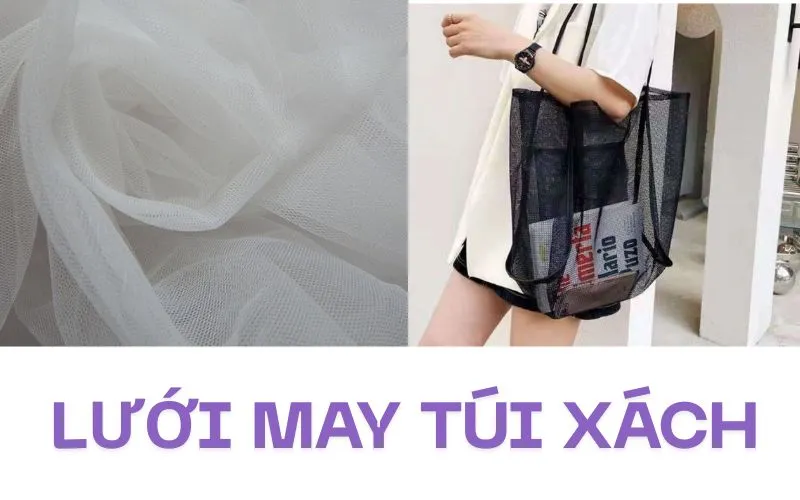
Have you ever wondered why some bags can hold so many items while still maintaining their perfect shape? The secret lies in using high-quality bag sewing mesh fabric. May Hop Phat camera bag manufacturer shares important knowledge about this special material and how to effectively apply it in production.
I. Overview of Bag Sewing Mesh Fabric
1. Definition and Basic Characteristics
Bag sewing mesh fabric is a textile type with a special mesh structure, woven from synthetic fibers to create evenly distributed small holes on the surface. This is not the ordinary fabric you see every day!
At May Hop Phat, we classify mesh fabric according to three main criteria:
| Criteria | Description | Main Applications |
|---|---|---|
| Mesh size | 1-5mm diameter | Sports bags, school backpacks |
| Fabric thickness | 0.3-0.8mm | Bag lining, outer surface |
| Surface coating | PU/PVC/EVA | Water-resistant, increased durability |
2. Classification by Material

Polyester mesh fabric accounts for 85% of the mesh fabric market share in Vietnam. Why? Because it has superior mechanical strength and excellent anti-stretch capability.
Nylon mesh is favored for premium products thanks to its natural softness. However, the price is 30-40% higher than polyester.
3. Applications in Bag Manufacturing Industry

Did you know that 95% of sports bags on the market use mesh fabric? This is no coincidence! Mesh fabric provides:
- Excellent breathability for wet items after exercise
- Lightweight – reduces weight by 25% compared to solid fabric
- Easy to clean – dries 3 times faster than regular fabric
II. Common Types of Mesh Fabric in Bag Sewing
1. Polyester 420D PU/PVC Mesh Fabric

420D polyester mesh is the “king” of mesh fabrics! The number 420D represents density (fiber density) – the higher, the more durable.
Technical specifications:
- Tensile strength: 45-55 kg/cm²
- Water resistance capability: 95% (with PU coating)
- Weight: 280-320 g/m²
- Thickness: 0.5-0.7mm
Why does May Hop Phat recommend this type? Simply – the price/quality ratio couldn’t be better!
2. Waterproof Nylon Mesh Fabric

Nylon mesh waterproof is a premium choice for those willing to invest. This fabric has a special fiber structure that helps water “slide” across the surface instead of soaking in.
Outstanding advantages:
- Water resistance of 99.8% even without coating
- Soft like natural leather
- Color-fast in harsh environments
3. Breathable Mesh Fabric
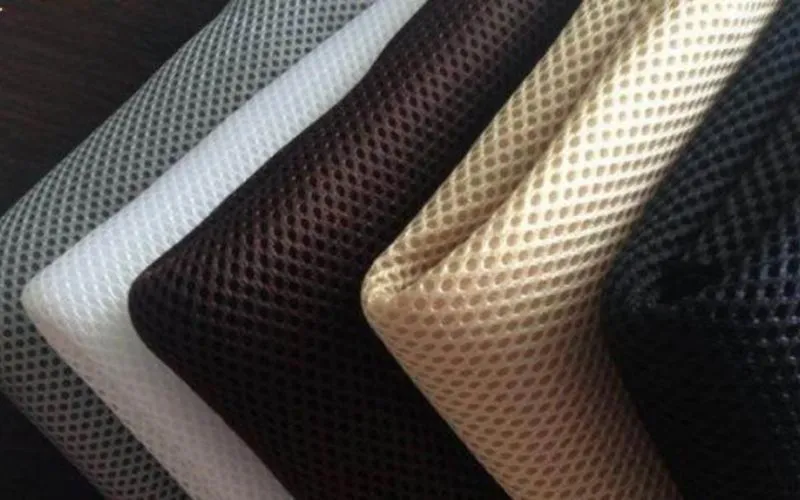
This is the fabric that “breathes” best! Air mesh fabric has large mesh holes (3-5mm) creating strong airflow.
Special applications:
- Laptop backpack back padding (reduces shirt wetness)
- Sports shoe bags
- Travel backpack compartments
4. Comparison of Advantages and Disadvantages
| Fabric Type | Advantages | Disadvantages | Price/m² |
|---|---|---|---|
| Polyester 420D | Durable, cheap, versatile | Somewhat stiff | 45,000-55,000 VND |
| Nylon mesh | Soft, premium | Expensive, attracts dirt easily | 65,000-85,000 VND |
| Air mesh | Maximum breathability | Poor water resistance | 35,000-45,000 VND |
III. Guide to Choosing Suitable Mesh Fabric
1. According to Usage Purpose
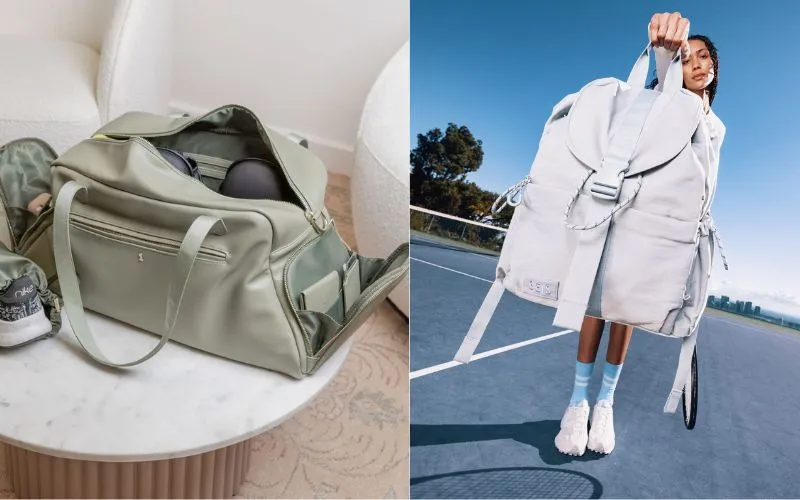
Sports bags: Prioritize breathability > water resistance. Choose air mesh or polyester 420D with large mesh holes.
School backpacks: Need balance between durability and lightness. Polyester 420D PU is the optimal choice.
Laptop bags: Require shock resistance and moisture protection. Nylon mesh with EVA padding.
2. According to Investment Budget
| Segment | Budget/m² | Suitable Fabric Type |
|---|---|---|
| Popular | 35,000-50,000 VND | Polyester 420D |
| Mid-range | 50,000-70,000 VND | Polyester 600D PU |
| Premium | 70,000-100,000 VND | Premium nylon mesh |
3. According to Technical Requirements
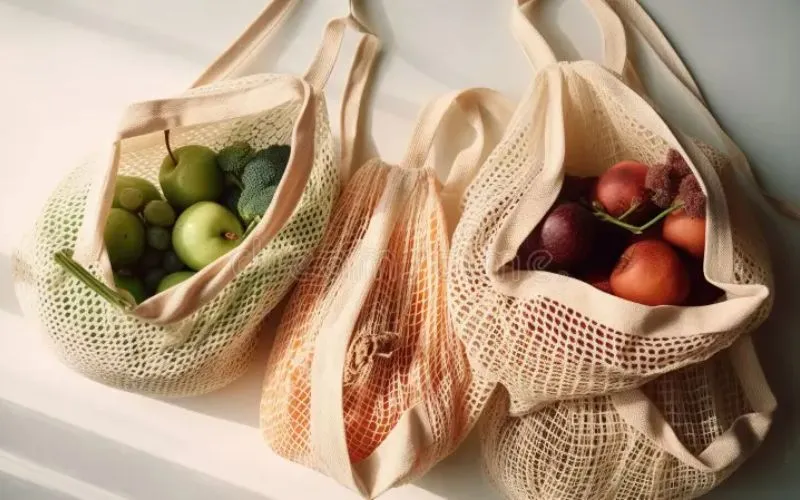
High durability: Choose density from 600D and above
Absolute water resistance: Must have PU/PVC coating
Environmentally friendly: Prioritize recycled fabric (recycled polyester)
IV. Production and Processing Process
1. Mesh Fabric Weaving Technique

Knitting process (knitting) creates a more durable mesh structure than traditional weaving. At May Hop Phat, we use German circular knitting machines to ensure uniformity.
Main steps:
- Yarn preparation: Check durability, color
- Mesh weaving: Adjust size according to requirements
- Quality inspection: Test durability, breathability
- Fabric rolling: Package according to export standards
2. PU/PVC Surface Treatment

Surface coating is the “soul” of high-quality mesh fabric! This process includes:
Traditional coating method:
- Mix PU/PVC polymer with precise ratio
- Coat evenly on fabric surface with precision rollers
- Dry at temperature 120-140°C
- Check adhesion and bending durability
Modern coating technology:
- Laminating: Stick polymer film to fabric
- Hot melt: Spray molten polymer
- UV coating: Use UV rays to solidify
3. Quality Inspection

Quality control at May Hop Phat follows ISO 9001:2015 standards:
Physical tests:
- Tensile strength (Tensile test)
- Tear strength (Tear test)
- Abrasion resistance (Abrasion test)
- Water resistance capability (Water resistance test)
Chemical tests:
- Formaldehyde check
- pH value test
- Polymer composition analysis
In summary, choosing the right bag sewing mesh fabric will determine the success of your production project. Don’t let product quality be affected by inappropriate cost-cutting. May Hop Phat is ready to accompany you with professional consulting services and high-quality products. Call hotline 0909.938.333 for the best support.