

 Tiếng Việt
Production of Backpacks From Recycled Materials: Green Trend Changing the Industry
Have you ever wondered where the backpack you’re wearing comes from? The sustainable direction is becoming a trend, and production of backpacks from recycled materials is the leading solution. This article will take you deep into this special process, from old plastic bottles to fashionable backpacks, and explore the positive values they bring to the environment.
I. Overview of Recycled Materials in Backpack Production
1. Common Recycled Materials

PET plastic from water bottles is the most widely used primary material. This type of plastic has code number 1, is completely recyclable and is recognized by the FDA as safe when in contact with food. What’s amazing is that from 12 PET plastic bottles of 500ml, we can create a complete backpack!
| Material Type | Origin | Outstanding Advantages |
|---|---|---|
| Recycled PET plastic | Water bottles, cola | Lightweight, durable, waterproof |
| Recycled polyester fabric | Old clothes | Soft, multi-colored |
| HDPE plastic | Shower gel bottles | Sturdy, impact-resistant |
Recycled polyester fabric is another excellent choice. This transformation process is truly special – old shirts, unused jeans are “reborn” into new fibers. May Hợp Phát particularly favors this material for its color diversity and natural softness.
2. Benefits of Using Recycled Materials
Production of backpacks from recycled materials brings three golden benefits that we cannot ignore:
Environmental protection is the top priority. Each recycled backpack helps reduce 73% energy compared to new production and saves 95% ore mining waste. Can you imagine? Just by making the right choice, we have contributed to saving the green planet!
Resource conservation is what businesses care about. Instead of mining new materials, we reuse what we already have. This not only reduces costs but also creates a sustainable supply chain.
Reduced production costs is the most practical benefit. Recycled materials are usually 20-30% cheaper than new materials, helping manufacturers like May Hợp Phát provide foldable backpack products at more competitive prices.
II. Production Process of Backpacks From Recycled Materials
1. Collection and Sorting Stage
The journey of a recycled backpack begins with plastic bottle collection. This is not simple work! Workers must meticulously sort by color – transparent bottles, green bottles, brown bottles – each type will create different colors for the final product.

Sorting process: → Collect PET plastic bottles → Sort by color (transparent, green, brown) → Remove caps and labels → Quality check → Initial cleaning
Cleaning and removing impurities is an extremely important step. All labels, adhesive, dirt must be completely removed. At May Hợp Phát, we use thermal washing technology to ensure materials reach 99.8% cleanliness.
2. Recycling Process into Raw Materials
Grinding and washing is the next interesting step. Plastic bottles are fed into specialized grinding machines, turning into small pieces like corn kernels. Then they are washed in hot water for about 1 hour to completely remove impurities.

Melting and creating plastic pellets is the stage where “magic” happens. Small plastic pieces are put into high-temperature furnaces, melted into liquid form, then rapidly cooled into evenly round plastic pellets. This is the raw material to create fabric fibers.
Fiber drawing and weaving into fabric is the final stage in the recycling process. Plastic pellets are melted again, drawn into thin fibers like hair, then woven into polyester fabric. This fabric has high durability, is waterproof and colorfast.
3. Backpack Production
Design and cutting requires the skill of experienced tailors. At May Hợp Phát, we use laser cutting machines to ensure the highest precision. Each piece of fabric is cut according to a separate design template, creating perfection in every detail.

Assembly and finishing is the stage of “final product”. Fabric pieces are sewn together with high-strength polyester thread. Zippers, straps, logos are carefully attached. Each seam is carefully checked to ensure durability.
Quality inspection is the final indispensable step. May Hợp Phát has a 15-point quality inspection process, from seam durability, waterproofing ability, to overall aesthetics. Only products that meet 100% standards are packaged and shipped.
III. Outstanding Advantages of Backpacks From Recycled Materials
1. Regarding Quality and Durability
The waterproofing ability of recycled backpacks truly exceeds expectations! Thanks to the special polyester fiber structure, water cannot penetrate. You can confidently use it in heavy rain without worrying about wet belongings inside.
High durability is another strength. Fabric from recycled PET has tensile strength 20% higher than conventional fabric. This means your backpack can be used for a long time without tearing or damage.
| Characteristic | Recycled Backpack | Regular Backpack |
|---|---|---|
| Tensile strength | 85 N/mm | 70 N/mm |
| Waterproofing ability | 98.5% | 85% |
| Lifespan | 5-7 years | 3-5 years |
UV protection feature is a special advantage. Recycled fabric has natural UV resistance ability, helping protect belongings inside from harmful sun rays. This is especially useful when you travel or outdoor activities.
2. Regarding Design and Features
Diverse colors and popular backpack styles on the market is what surprises many people. Who says recycled products must be monotonous? May Hợp Phát has created over 50 different colors from recycled materials, from light pastels to vibrant neons.
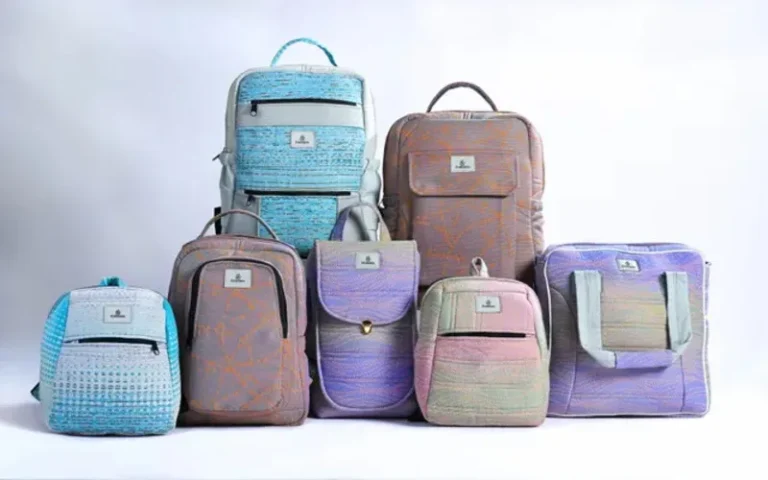
Lightweight is a truly valuable advantage. Recycled backpacks are 15-20% lighter than regular backpacks of the same size. This helps reduce shoulder and neck pressure, especially important for students and office workers who carry backpacks daily.
Anti-theft features are intelligently integrated. Many recycled backpack models have hidden compartments, two-way zippers and cut-resistant material. You can feel secure when moving in crowds or public transportation.
IV. Positive Environmental Impact
Reducing plastic waste is the most positive impact. Each recycled backpack helps “rescue” 12 plastic bottles from becoming waste. If 1 million backpacks are produced from recycled materials, we have prevented 12 million plastic bottles from polluting the environment!

Saving production energy is an unmissable benefit. Production from recycled materials is a solution to save materials in backpack production up to 73% energy compared to new production. This means reducing CO2 emissions and contributing to combating climate change.
Contributing to the circular economy – a sustainable development model. Instead of the “production – use – disposal” cycle, we create a “production – use – recycle – production” cycle. This is the future of the industry!
V. Industry Trends and Future
Market demand increasing amazingly. According to the latest research, 85% of young consumers are willing to pay extra for environmentally friendly products. Vietnamese students are particularly interested in sustainable products.

Government support policies are increasingly clear. Vietnam has committed to reduce 30% plastic waste by 2030. Businesses producing recycled products will receive tax incentives and capital support.
Advanced recycling technology continues to develop. Chemical recycling techniques allow 100% PET plastic recycling without reducing quality. Artificial intelligence is applied to automatic sorting and process optimization.
VI. Guide to Choosing Quality Recycled Backpacks
Evaluation criteria for quality recycled backpacks include many factors. First, check environmental certifications like REACH, ISO 14001. Next, observe seams – must be even, firm with no excess thread.
How to identify genuine products through the following signs:
- Brand logo clear, not faded
- Label with complete origin information
- Material soft, no strange smell
- Zipper runs smoothly, not stuck
Reasonable price for quality recycled backpacks ranges 300,000 – 800,000 VND depending on size and features. Prices too cheap usually do not guarantee quality, prices too high may not be worth it.
| Segment | Price (VND) | Characteristics |
|---|---|---|
| Popular | 300,000 – 500,000 | Basic, durable |
| Mid-range | 500,000 – 700,000 | Many features |
| Premium | 700,000+ | Special design |
In summary, production of backpacks from recycled materials is the optimal solution for both businesses and the environment. With modern technology, these backpacks not only ensure quality and durability but also carry profound humanitarian meaning. By choosing recycled products, you are not just buying a backpack, but are participating in a green revolution. Contact us to create quality products together.