

 Tiếng Việt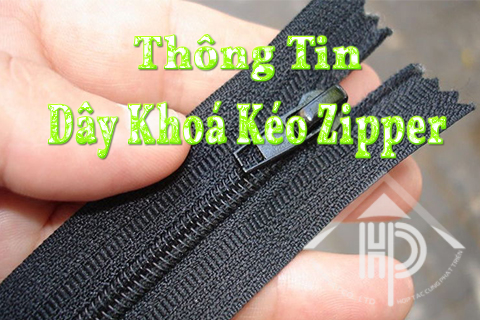
Can you imagine your favorite bag or your favorite jacket without a zipper? Of course, the answer is no! Zippers play an important role in our daily lives.
The discovery of the zipper was a breakthrough in fashion history. Fashion designers have an avenue to create new designs. The invention of the zipper made life much easier. Let’s learn about this handy item through the article below from Hop Phat Garment.
What Is a Zipper | Types of Zippers
Although slide fasteners, as they were later called, were introduced in 1912, it took about 20 more years before they began to be used in men’s and women’s clothing. Since then, zipper has become one of the most widely used fastening methods in the apparel and bag industry. Beyond practical purposes, zippers are also used for decoration or as a design feature.

Definition of a Zipper
A zipper is a binding or opening device used to open or close parts of clothing, handbags, backpacks, or other items. It consists of a slider with a tab that facilitates the opening or closing of two interlocking teeth or coils connected to strips of fabric tape.
In the manufacture of trousers, shirts, and jackets, a zip or zipper is an essential component used to close or open garments.
Components of a Zipper
You may sometimes be confused about the different parts of a zipper because you don’t know everything about it. Here is a breakdown of a zipper to help clarify. A standard zip has the following components:
Tape The zipper tape is the strip of fabric at the edge of the zipper that holds the coils or teeth and allows you to sew the zipper onto products. Most zipper tapes are woven from 100% polyester, creating a sturdy and lightweight tape that does not shrink. Knitted zipper tape is soft and flexible and is mainly used for garments made from knitted fabrics.
Chain This element is also called teeth or scoops and is made from metal or plastic materials. Metal scoops are stamped from brass or aluminum and then clamped onto the beaded edge of the tape. Additionally, continuous monofilament coils made from nylon or polyester are woven directly onto the tape edge. Zipper chain coils are lighter and more elastic than metal chains.
Slider The function of the slider is to join or separate the opposing sides of the chain as it moves up and down. The slider may be non-locking or may have built-in locking action — semi-automatic or fully automatic. An auto-lock slider is very reliable, although it is bulkier than the other two types.
Top and Bottom Stops These prevent the slider from coming off by going too far up or down. For zippers where the top ends are sewn into the waistband seam, stops are usually dispensed with as the seam acts as the stop. The bottom stop prevents the zip from opening at the lower end of the tape, thus retaining the slider.
Pull Tab This allows the consumer to easily move the slider in the desired direction. Tabs are produced in various shapes and finishes and are often used for decorative purposes.
Types of Zippers
There are several types of zippers available, allowing designers to choose the most suitable zipper for a specific garment or end use.
Regular Type Used in various lengths for skirts, dresses, and other garments. This zip is typically inserted into a seam. While the zip itself is hidden, the installation stitching is visible on the outside of the garment, backpack, or bag. A half-pressure foot is used to install this zipper, allowing the operator to sew close to the chain.
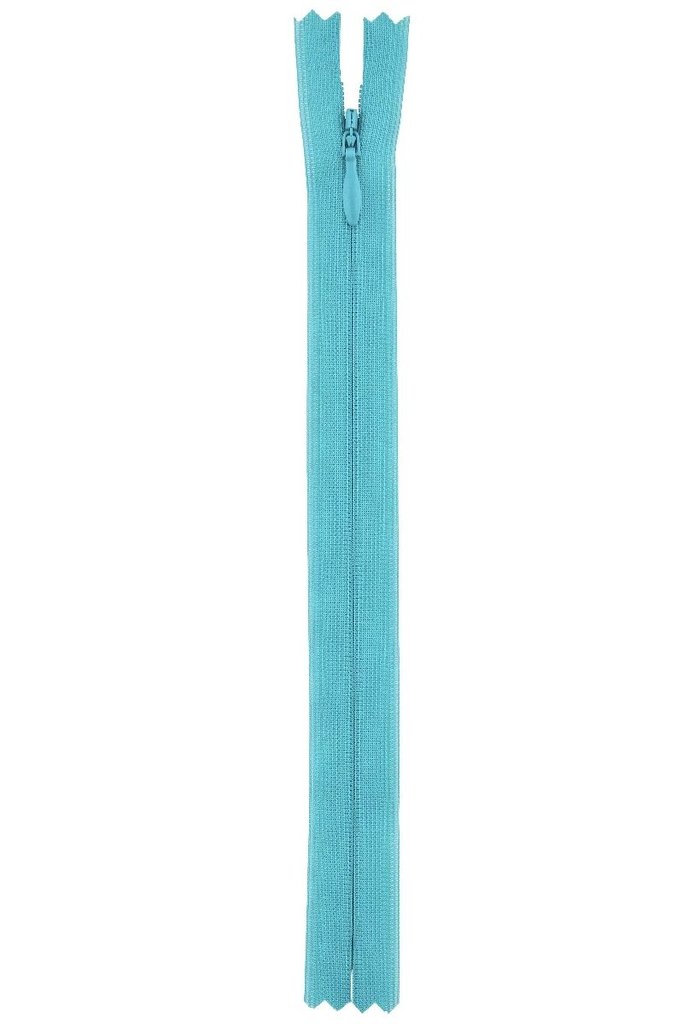
Invisible Type Called so because neither the zip nor its installation stitching can be seen from the right side of the opening. Inserting this zip requires a specific type of presser foot, and the installation process itself is shorter and more straightforward than a regular zip. You’ll often find these zippers used in evening gowns, office wear, and particularly in áo dài (Vietnamese traditional dress).
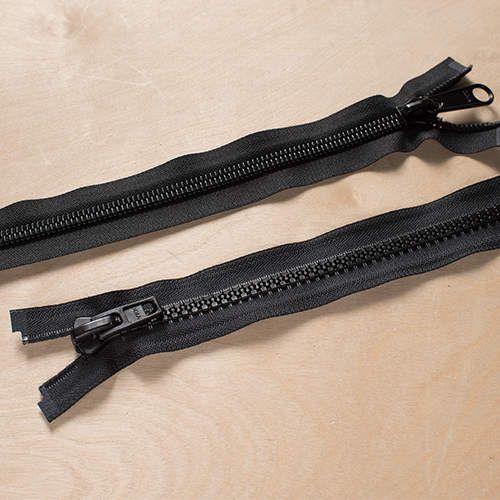
Separating Type This type of zipper is used when the garment can be worn fully closed or fully open. Typical applications of separating zippers include parka jackets and zip-out liners.

Continuous Type Used for men’s trousers and all types of jeans, continuous zippers with an average length of 50m are wound into a roll with a metal chain closed or separated into two left-right sides. This allows each side of the zip to be placed into the corresponding panels before the bottom seam is closed. The slider and bottom stop are installed using small mechanical devices placed at appropriate positions along the production line.
Continuous metal zippers are cheaper to use than zippers made to specific lengths. They can be cut to exact required measurements without needing to maintain regular stocks in various sizes or proportions, with bound ends.
Choosing the Right Zipper for Your Bag
When Googling “how to choose the perfect handbag,” you’ll find that a good bag or backpack depends on design, durability, bag type, etc. — and one of the reasons your bag becomes more complete is choosing the right zipper for your bag. Hop Phat Garment guides you on several things to consider when selecting a zipper for your bag collection.
1. Choose the Right Zipper Type Depending on the price range of your product, you’ll make a decision about the type of zipper to use. If you intend to make a premium product, luxury zippers will be your best choice. The zipper type then determines the type of slider you’ll use. Typically, handbags and backpacks use regular or separating zipper types.

2. Slider Type When talking about slider types, we’re referring to locking and non-locking sliders. A locking slider has an internal mechanism inside the slider body to prevent it from moving along the zipper chain. This is most commonly used on vertical applications, such as jackets.
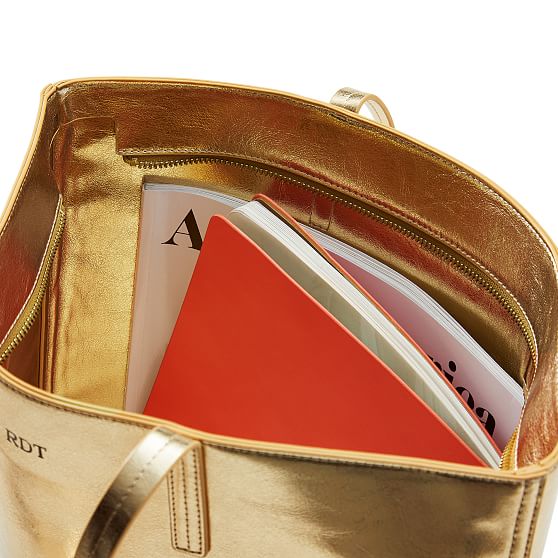
A non-locking slider is exactly that — it doesn’t lock at all and moves freely along the chain without needing to pull the slider. On handbags, the most commonly used slider is the non-locking slider.
3. Number of Sliders In some bag designs, one slider is used to close the zipper. In others, two sliders are used. With two sliders, they come together to close the zipper and move apart to open the bag — this is called a two-way zipper. With two sliders, you should look for a zipper that uses symmetrical teeth. This ensures the slider will work in both directions without any glitches. Nylon coil, molded plastic, and some metal zippers will work in both directions. Pay special attention to metal zippers as by default they are not meant to run in two directions.
Conclusion
Having a great quality zipper will elevate your design. After all, you’ve spent so much time and effort designing a masterpiece — don’t let the zipper ruin the entire experience.