Your wardrobe almost certainly contains at least one garment made from cotton fabric. Have you ever wondered why people tend to prioritize cotton when shopping for clothes?
But do you know how many types of cotton fabric there are? Do you know how to identify real cotton? Join Hop Phat in reading this article to uncover the secrets of this popular fabric.
What Is Cotton Fabric?
Cotton fabric is one of the most widely used materials in consumer manufacturing today. It is a synthetic fabric composed primarily of natural cotton fibers combined with certain chemical substances. Depending on the type of fabric, manufacturers will balance the percentage ratio of cotton fibers to chemicals accordingly.
Introduction to cotton fabric
The Origin of Cotton Fabric
This fabric made from cotton fibers has been discovered and used since ancient times. When agriculture emerged, people learned how to grow cotton plants. Cotton was cultivated extensively and widely. People would harvest the cotton bolls, spin them into thread, and then weave them into fabric for making clothing.
Origin of cotton fabric
How Is Cotton Fabric Produced?
To produce high-quality cotton fabric for today’s consumers, the cotton production process involves multiple steps and is by no means simple. Here is a step-by-step breakdown:
Step 1: Harvesting and Sorting Cotton Fibers Cotton harvesting takes place in November and December each year, divided into 3 separate rounds: the first round collects open bolls from the base of the plant; the second round (1–15 days later) harvests bolls from the middle section of the stem; and the third round collects all remaining open bolls from the top. After harvesting, the cotton fibers are sorted — only those meeting quality standards are kept, while the rest are discarded. Quality fibers are then dried in clean, well-ventilated areas to prevent contamination.
Step 2: Refining the Cotton Fibers Refining is one of the most critical stages in the cotton production process. Impurities within the fiber are separated and cleaned out — this step is carried out after the cotton fibers have been fully dried. The fibers are sent to refining facilities where they are torn apart to separate them without damaging the individual fiber quality. They are then placed into boilers and filtered multiple times to remove impurities such as nitrogen, pectin, organic acids, and natural color until only pure cotton fiber remains.
Step 3: Dissolving and Spinning After refining, the cotton fiber is converted into a liquid form and dissolved with special solutions to form a mixture. This mixture is fed into spinning machines and forced through tiny holes to stretch and form cotton threads.
Step 4: Weaving the Cotton Fabric This is the chemical processing stage. Warp and weft threads are woven together to create fabric panels. During weaving, the fabric is further treated to cause the cotton fibers to swell, improving water absorption and dye uptake. Next, the fabric is bleached to remove its natural color, clean off any grease or oil, and achieve the required whiteness before entering the dyeing process.
Step 5: Dyeing the Cotton Fabric Dyeing is the final step in completing cotton fabric. The fabric is treated with dyes and organic additive solutions to help it absorb color more easily. Synthetic dyes and various chemical additives are used to optimize color uptake. After each dyeing session, the fabric is washed multiple times to remove any remaining compounds, fiber fragments, or dirt on the surface.
Physical and Chemical Properties of Cotton Fabric
Physical properties: The fabric surface is smooth and fine, which makes it prone to wrinkling when rubbed or crumpled.
Chemical properties: Compared to blended fabrics, cotton fabric when burned does not produce a plastic smell — it has a woody smell instead. After burning, the fabric does not form clumps; it burns slowly, leaving a pinkish-red ash that feels smooth to the touch and dissolves completely.
Advantages and Disadvantages of Cotton Fabric
Advantages of Cotton Fabric: Being made primarily from natural cotton fibers, it is safe and does not cause skin irritation during use. Cotton fabric has excellent moisture absorption, so users feel comfortable and light. It can be washed, treated with bleaching agents, and dries quickly. It is highly durable, and because the raw materials are inexpensive and easy to source, it remains more affordable than many other fabrics despite its many advantages.
Disadvantages of Cotton Fabric: If you want to use 100% cotton fabric, the price will be quite high. The fabric is also stiffer and generally more suitable for men, which limits its popularity. To meet broader market demand, a solution was found by combining cotton fiber with spandex fiber, resulting in a softer product at a more reasonable price that suits the majority of consumer preferences.
Types of Cotton Fabric on the Market
There are many fabric types on the market. To find the cotton fabric that best suits your needs, you first need to understand the different types and how to distinguish them from other fabrics.
100% Cotton Fabric This fabric is made from 100% pure cotton fiber, with no chemical processing or blending with any other material. Its key advantages are excellent breathability and moisture absorption. However, the stiffer fiber makes it more suitable for men, and its price is relatively high at around 150–190 VND thousand per kg, so it is not widely used.
100% cotton fabric
Cotton USA Fabric With its long, skin-like fiber structure, this fabric outperforms other cotton varieties. Built on the properties of traditional cotton, Cotton USA fabric amplifies the advantages and addresses the weaknesses of standard cotton — specifically its tendency to wrinkle, shrink, and crease during use and washing.
Cotton USA fabric
Cotton Poly Fabric Cotton poly fabric is a blend of pure cotton fiber and various synthetic fibers. Depending on the intended use, manufacturers mix cotton and polyester at appropriate ratios. If a softer fabric is desired, more cotton than polyester is used. This fabric is lightweight, highly durable, has good elasticity, and is particularly affordable — making it a popular choice among consumers.
Cotton poly fabric
Cotton 65/35 (CVC) Fabric Cotton 65/35 fabric is produced to a standard of 65% cotton and 35% polyester (PE). This perfect combination produces the cotton 65/35 blend. It is widely used due to its good elasticity, high durability, and fast moisture absorption.
Cotton CVC fabric (65/35)
How to Identify Cotton Fabric
Due to the high demand for cotton fabric, many counterfeit versions have appeared on the market. To avoid purchasing low-quality fake products, you need to know how to distinguish real cotton from imitations.
Identifying Cotton Fabric by Water Absorption 100% cotton fabric absorbs water quickly and evenly across the entire surface. Blended fabrics absorb more slowly and unevenly due to the polyester content. Pure cotton absorbs water almost instantly and uniformly, while poly-blended fabric is slow and spreads unevenly due to polyester’s water-repelling properties.
Identifying Cotton Fabric by Heat/Burning Method 100% cotton: Take a small fabric sample and burn it — if the flame is pink, the smoke is grey, and no residue or plastic remains after burning, it is definitely cotton. Cotton-blended fabric: Because of the polyester (PE) content, burning will produce a plastic/rubber smell — the stronger the smell, the higher the polyester content. The burned fabric will also partially clump up, and the proportion of clumping corresponds to the polyester ratio.
Identifying Cotton Fabric by Senses 100% cotton fabric feels smooth and breathable but not cold to the touch, and easily wrinkles or creases during use. Standard cotton jersey (thun cotton): When observed, you’ll notice it creases easily when folded and wrinkles when rubbed. Running your hand along the surface, you’ll feel softness and smoothness but no drape, and it doesn’t feel cold like other blended cotton fabrics. Blended jersey fabric: Doesn’t wrinkle when rubbed. Appears shiny and gives the impression of high durability.
Applications of Cotton Fabric
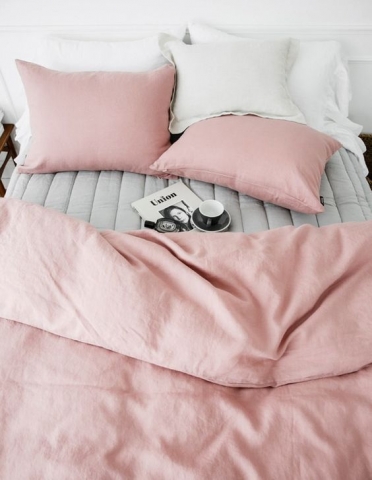
Cotton Fabric in Bedding Production With its outstanding characteristics — softness, fast moisture absorption, breathability, and safety for users — cotton fabric is widely used to make bedding products (sheets, blankets, pillowcases), creating a comfortable and cozy sleeping experience. It also dries quickly after washing, making laundry maintenance hassle-free.
Cotton material used in bedding production
Cotton Fabric in Fashion ProductionCotton fabric is trusted by many fashion brands. Its numerous advantages over other fabrics, lower price point, and especially its excellent sweat absorption make it ideally suited to Vietnam’s hot climate. As a result, fashion brands confidently use cotton to create their highest-quality products for consumers.
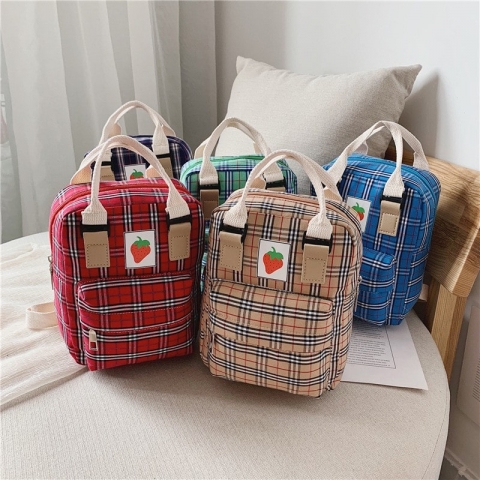
Cotton Fabric in Backpack and Bag Production Just like the fashion industry, the bag manufacturing industry is also very fond of cotton fabric for producing backpacks and handbags. Cotton bag styles — such as drawstring backpacks, tote bags, crossbody bags, and more — are loved by customers of all ages.
These bags come in a wide variety of designs and colors. If you want to express your personality, you can have your own custom patterns printed or designed on them.
Cotton fabric backpack
Frequently Asked Questions About Cotton Fabric
Is cotton fabric cool to wear? When wearing cotton jersey (thun cotton), the fabric offers many benefits: it is breathable and cooling, barely fades in color, is durable when washed, dissipates heat, and cools the body.
What is cold cotton fabric? Cold cotton fabric is widely available on the market. It is a synthetic fabric composed of polyester or nylon. To enhance stretch and elasticity, some versions also include spandex at a ratio of 2% to 5%. Cold cotton is considered one of the most functional fabric types, suitable for all users.
What is Thai cotton fabric? Thai cotton fabric is woven from 95% cotton fiber using Thailand’s modern weaving technology, with an additional 5% spandex fiber to increase softness and elasticity. It is considered the highest-quality cotton fabric currently available on the market.
This article from Hop Phat Garment Company has shared useful information about the characteristics of cotton fabric, how to identify it, and how to tell real cotton from imitations. We hope you now have a solid understanding of everything you need to know about cotton fabric.


 Tiếng Việt