

 Tiếng Việt
Recycling and reusing tools, clothes, old backpacks and bags is very popular with many people, turning an old item into new is both economical and environmentally friendly. Currently there are many ways to recycle old clothes, you can sew backpacks, bags from jeans or sew a new pen box pouch for children or for yourself is also quite a good idea.
Today, Hop Phat backpack manufacturing facility will guide you to sew a pen box pouch from old clothes. Let’s follow along.
Sewing Pen Box Pouch From Old Clothes
Tools Needed:
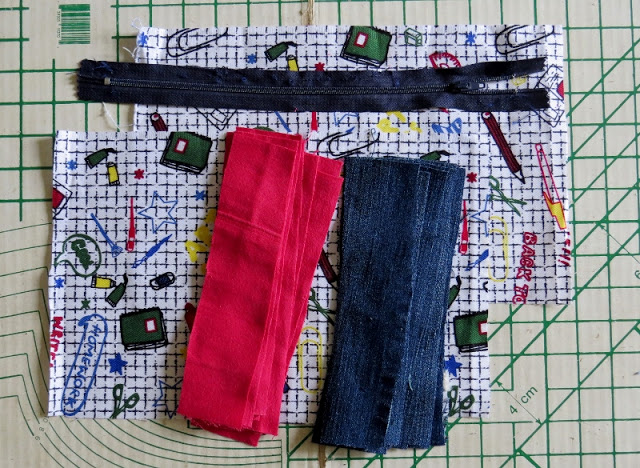
- Fabric scraps from denim jeans (or other types)
- Fabric for lining the pen box
- One zipper – at least 26cm (10″) long
- Necessary sewing tools (needle, thread, pins, sewing machine, scissors, ruler)
Start Sewing Pen Pouch
- Cut 2 inner fabric rectangles 26 x 17 cm (10 x 6.75″)
- Cut 16 denim fabric strips, size 17 x 4 cm (6.75 x 1.5″). I made 8 strips each of two colors, but you can combine any patterns and color schemes you choose!
- Take the fabric strips and sew them together alternately along the long edges. Make sure you turn the right sides of the fabric together and sew with a 2/8″ seam.
- Continue until you have connected 8 strips together, then start again with the remaining 8 strips.
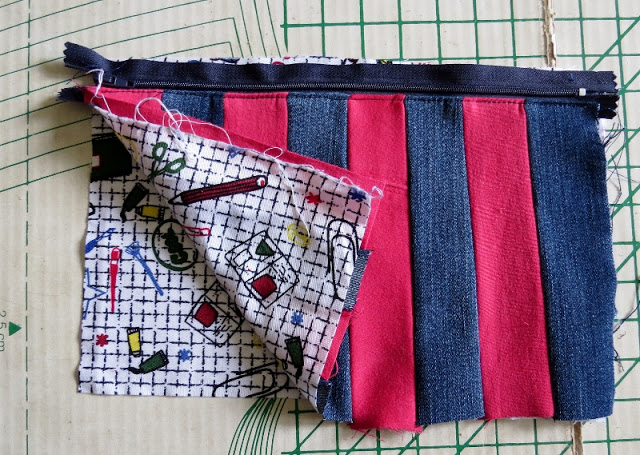
Now you will have two outer rectangles to make the pen box pouch.
- Take the iron, iron all the seams flat on the back of the rectangles. This makes it easier for you to sew.

- Place the zipper face down along the top long edge of one of the outer fabric rectangles. Then, place one of the inner rectangles face down. The two pieces of fabric should be on two right sides together and have the zipper sandwiched in between.
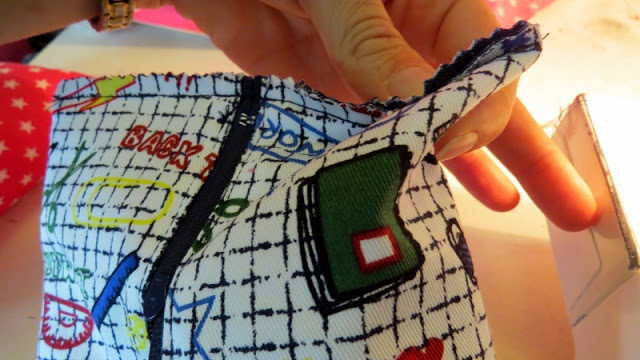
- Pin along the top edge, ensuring all three edges (two fabrics and zipper) are aligned with each other.
- Using the zipper foot on the machine, sew where you pinned close to the zipper teeth.
- Then, open the pieces of fabric and pull away from the zipper to flatten them. Sew along the top fabric, close to the zipper. This will help the fabrics not get caught in the zipper when you open and close it.
- Place the piece of fabric you just sewed on top of the remaining inner fabric rectangle, so that both inner pieces of fabric face right sides together (as shown below)
- Now, place the other outer fabric rectangle face down on the whole thing.
- Pin along the top edge, then, using the zipper foot, sew close to the zipper teeth. Then open the piece of fabric and pull away from the zipper. Sew from top down the other side of the zipper. (as shown below)
- Now fold the pieces of fabric so that the two outer pieces of fabric face each other and the two inner pieces of fabric face each other. Pin and sew the two outer edges together as shown here.

- Now reach in and open your zipper, then turn your pencil box inside out, still with the zipper open.
- Spread the two pieces of fabric flat and lie flat so that the zipper line is at the top and in the middle, running along the seam like the bottom seam. Pin both edges closed. Keep the zipper open but make sure the zipper teeth touch the open end of the zipper.
- Sew along both edges, running back and forth across the zipper head several times to secure.
- Then, use pinking shears to trim the seam to avoid fraying, as this seam will still be exposed inside the pen box pouch. Alternatively, you can use a zigzag stitch along the seam.

Making the Pencil Box Pouch Have a “Box Shape”
- First, pinch each corner between your fingers like this to form a triangle.
- Then, flatten the triangle and sew a straight line across it about 3 cm (1.25″) from that point
- Repeat this action similarly for all 4 corners. Run 2 or 3 stitches on each corner to ensure the seams are secure.
- Trim each corner with scissors and finish the seam with a zigzag stitch or serger/overlock tool

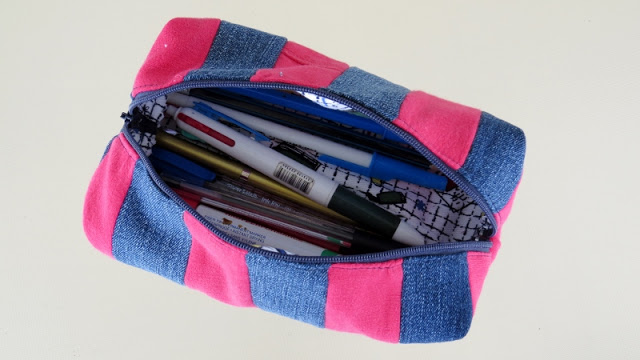
That’s it. Turn the pen box pouch inside out and admire your work.
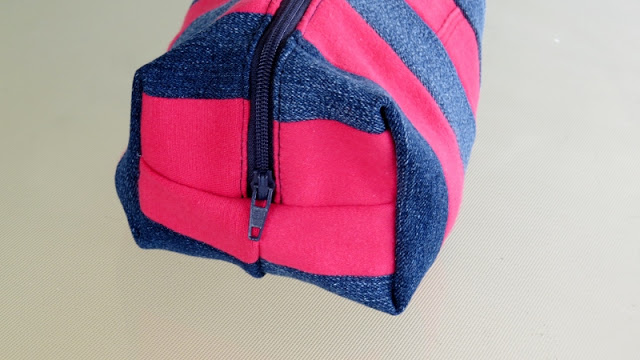
In the picture below, you can see the strip has a seam on the side of the pen box pouch.
Conclusion
So with just a few simple steps you have a new pen box pouch from old clothes. Very useful, right? Hopefully the above sharing helps inspire more ideas about rebuilding from old tools and materials. Contributing to protecting and building the environment.