

 Tiếng Việt
Bag Sewing Needles: Professional Selection & Usage Guide
In bag manufacturing in general and sports bag production specifically, professional bag sewing needles determine 80% of the finished product quality. May Hop Phat, based on extensive industry experience, will guide seamstresses and handmade enthusiasts to choose the right needles, optimize costs, and enhance skills for sewing durable and beautiful bags through this article.
I. Why Sewing Needles Are the “Soul” of Bags?
In the sewing profession, needles are not just simple tools but are decisive factors in the final product quality. Appropriate bag sewing needles help you create strong, beautiful, and durable stitching lines over time.
Imagine sewing needles like an artist’s brush. A good brush helps create delicate strokes, while good needles deliver perfect stitching lines. When bag sewing needles are properly selected, they will:

- Create uniform stitching without fraying
- Minimize thread breakage during sewing
- Protect fabric from tearing or deformation
- Extend the lifespan of the bag
According to statistics from professional sewing workshops, choosing the wrong needles can reduce final product quality by 40%. This not only affects aesthetics but also directly impacts the durability of bags.
II. Classification of Bag Sewing Needles by Experts
1. Needles by Fabric Material
Each fabric type requires a specific needle type. Understanding the characteristics of each needle type will help you make the most accurate choice.
Leather Needles: Needles for leather typically have blunt tips or special needle points to avoid tearing leather. When working with genuine leather, you need bag sewing needles with high hardness and good penetration ability. The thicker the leather, the larger the needle needed.
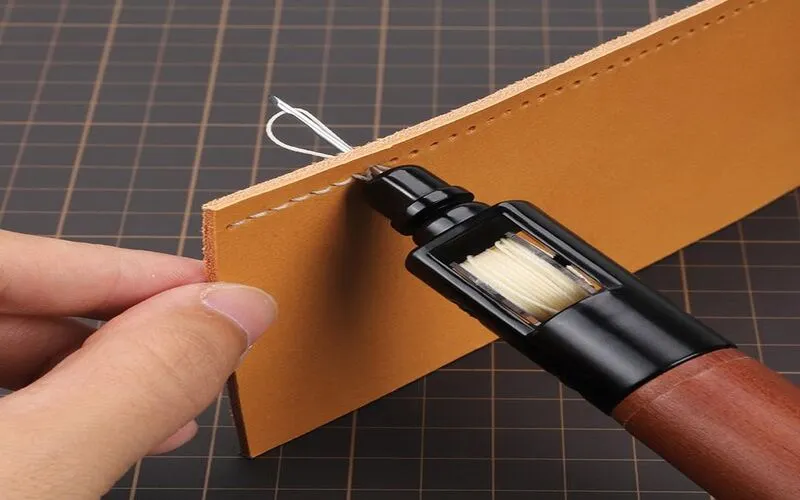
Canvas and Nylon Fabric Needles: Canvas is a popular material in bag production due to its high durability. However, to sew beautiful canvas fabric, you need needles with sharp points and sturdy shafts. Bag sewing needles for canvas typically range from size 100/16 to 110/18.
Cotton and Linen Needles: These are softer materials, easier to sew than leather or canvas. Needles for cotton are typically smaller in size, from 80/12 to 90/14.
2. Needles by Size and Application
| Needle Size | Suitable Fabric | Application |
|---|---|---|
| 60/8 – 70/10 | Thin fabric, silk | Delicate bags, decorative details |
| 80/12 – 90/14 | Cotton, linen | Everyday bags, tote bags |
| 100/16 – 110/18 | Canvas, denim | Durable bags, travel bags |
| 120/19 – 130/21 | Thick leather, industrial fabric | Leather bags, specialized backpacks |
III. Secrets to Choosing Bag Sewing Needles Like Professional Seamstresses
1. Five Decisive Factors in Needle Selection
Experience from May Hop Phat shows that choosing bag sewing needles requires considering multiple factors simultaneously:
First, the type and thickness of fabric. Thin fabric needs small needles, thick fabric needs large needles – this is the most basic principle.
Second, the type of stitching you want to create. Simple straight stitching differs from complex decorative stitching.
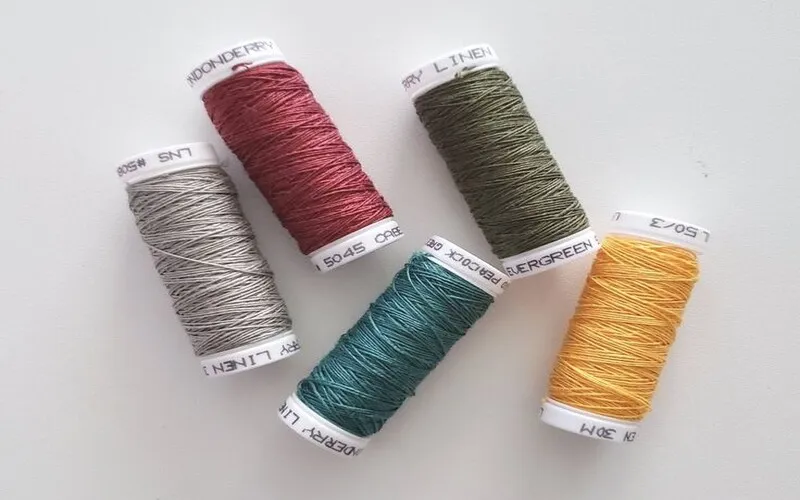
Third, the type of thread used. Thick thread needs needles with larger eye holes so thread can pass through easily.
Fourth, the type of sewing machine. Home sewing machines and industrial sewing machines have different needle requirements.
Fifth, the final purpose of use. Gift bags require higher precision than everyday-use bags.
2. Detailed Comparison Table by Material
Based on practical experience from professional seamstresses, we have compiled the following comparison table:
| Material | Recommended Needle Type | Size | Characteristics |
|---|---|---|---|
| Genuine leather | Blunt tip needle | 110/18 – 120/19 | Does not tear leather |
| Faux leather | Sharp tip needle | 90/14 – 100/16 | Good penetration |
| Canvas | Sturdy shaft needle | 100/16 – 110/18 | Resists bending |
| Cotton | Standard needle | 80/12 – 90/14 | Versatile |
| Nylon fabric | Special sharp needle | 90/14 – 100/16 | Anti-slip |
Learn more:
- Article: Is ordering from a bag manufacturing factory profitable? to gain knowledge that can bring good profits to the business.
- Answer the question: How much fabric does it take to sew 1 bag? helps accurately calculate the necessary amount of fabric for bag sewing to save material costs.
IV. Top Trusted Bag Sewing Needle Brands
1. Schmetz – German Quality Standard
Schmetz is known as the “king” in the needle manufacturing field. Bag sewing needles from this brand have outstanding durability and ability to create perfect stitching lines.
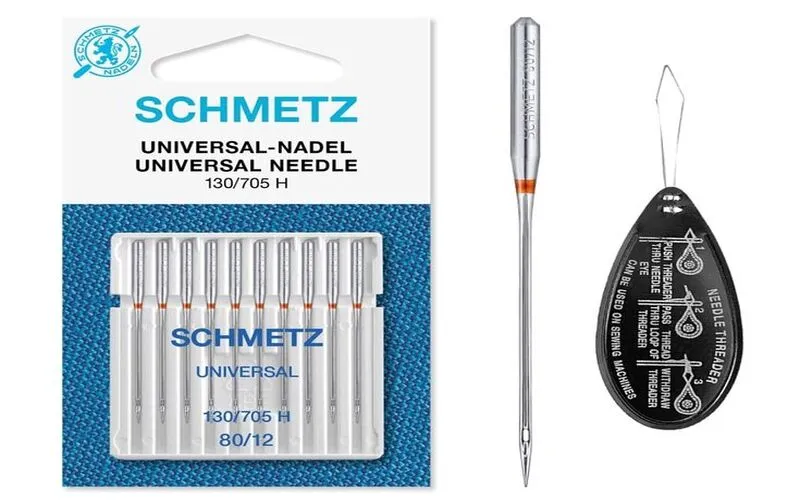
Schmetz needle highlights:
- Special steel material, high hardness
- Precisely designed needle point, reduces friction
- Lifespan 2-3 times longer than regular needles
- Diverse sizes for all needs
2. Organ – Economical Choice from Japan
Organ brings the perfect balance between quality and price. Bag sewing needles Organ are trusted by many Vietnamese sewing workshops.

Organ needle advantages:
- Reasonable price, suitable for mass market
- Stable quality over time
- Easy to purchase in the Vietnamese market
- Suitable for home and semi-industrial sewing machines
3. Other Notable Brands
Singer and Brother provide good quality needles at affordable prices. This is a suitable choice for beginners learning bag sewing.
Juki specializes in industrial sewing needles, suitable for large-scale sewing workshops.
V. Guide to Using Bag Sewing Needles Effectively
1. Proper Needle Installation Technique
Installing bag sewing needles correctly is the first step to achieving perfect stitching. Follow these steps:
Step 1: Turn off the sewing machine and raise the presser foot to the highest position
Step 2: Loosen the needle clamp screw with a specialized screwdriver
Step 3: Install the needle with the flat side facing backward
Step 4: Push the needle up as high as possible
Step 5: Tighten the needle clamp screw
Important note: The needle must be pushed up to the highest position to ensure stable operation.
2. Handy Tips When Sewing Bags
Based on experience from May Hop Phat, we share some handy tips:
Adjust thread tension appropriately: Thick fabric needs less tension than thin fabric. Try sewing on sample fabric before official sewing.

Appropriate sewing speed: With thick fabrics like leather or canvas, sew slowly to avoid needle bending or breaking.
Handle corners and curves: Stop the needle in the down position when needing to turn fabric, this keeps stitching continuous and beautiful.
VI. Proper Needle Maintenance & Replacement
1. Signs Needing New Needle Replacement
Dull needle is the most obvious sign. When the needle is dull, you will hear a “popping” sound when the needle penetrates the fabric.
Bent needle typically occurs when sewing fabric that is too thick or sewing too fast. Bent needles create uneven stitching.
Decreased stitching quality manifests through frayed thread, crooked stitching, or wrinkled fabric.

2. How to Store Needles to Increase Lifespan
Bag sewing needles need to be stored in dry conditions, avoiding mold and mildew. Use a specialized needle box with compartments divided by size.
Classifying needles by size and fabric type will help you easily choose the right needle for each project.
VII. Common Errors & Solutions When Sewing Bags
1. Five Most Common Mistakes
Choosing wrong needle size is the most common error. Many people tend to choose needles that are too large, causing large holes in fabric and affecting aesthetics.
Not changing needles regularly leads to gradually decreasing sewing quality over time. Even a good needle has usage limits.
Incorrect needle installation causes unstable needle operation, easy breakage, and poor stitching.
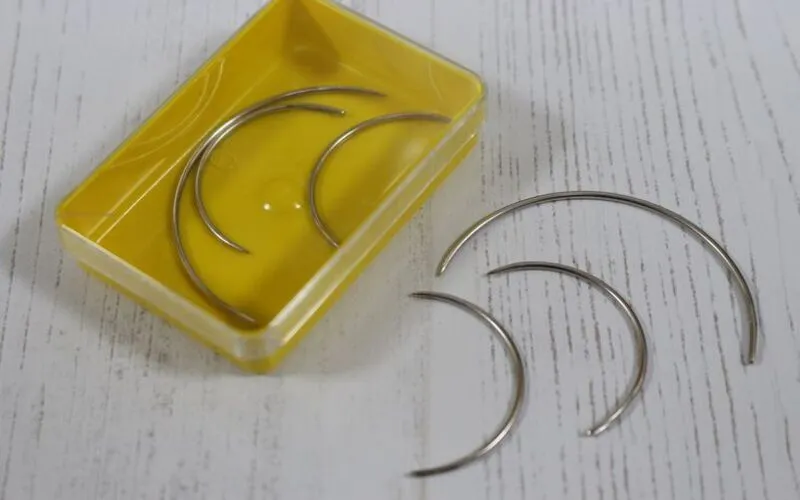
Mismatched needle-thread combination causes thread breakage or creates unnecessary tension.
Ignoring needle maintenance causes needles to deteriorate quickly and lose functionality.
2. Expert Solutions
At May Hop Phat, we recommend having a checklist before starting to sew:
- Check if needle is dull or bent
- Ensure needle matches fabric type
- Try sewing on sample fabric first
- Adjust thread tension appropriately
- Prepare backup needles
Mastering knowledge about bag sewing needles helps improve product quality and save production costs. Apply professional experiences from May Hop Phat immediately to create the most perfect bags. If you are interested in backpack and bag sewing services for business, please call 0909 938 333 for detailed consultation.