

 Tiếng Việt
Fabric bag sewing patterns are essential tools that help our skilled sewing workers create accurate and professional products. Hop Phat Camera Bag Factory has a complete production process and will provide comprehensive knowledge about pattern usage techniques, from basic to advanced, helping you improve product quality and optimize production processes.
I. What Are Fabric Bag Sewing Patterns? Why Are They Important?
1. Definition and Role of Patterns in Bag Sewing
Fabric bag sewing patterns are pre-drawn design templates on paper or other materials that help sewers cut fabric according to exact desired sizes and shapes. Unlike cutting fabric by intuition, patterns provide absolute precision and consistency in the final product.
In professional fabric bag production processes, patterns play the role of technical blueprints. Each line on a pattern has its own meaning: main cutting lines, fold lines, zipper hole marking positions, and reference points for joining. This ensures that every bag produced has uniform quality and high aesthetics.
2. Benefits of Using Professional Patterns
Using patterns in fabric bag sewing brings five core benefits:
Material Savings: Optimally designed patterns help you arrange fabric pieces most efficiently, minimizing excess fabric. Statistics show that using professional patterns can save up to 2% of materials compared to free cutting.

Ensuring Accuracy: Each cutting line is precisely positioned to the millimeter, helping bag details fit perfectly when joined. This is especially important for complex bag designs with many compartments and details.
Increasing Production Speed: With ready-made patterns, you don’t need to measure and redesign from scratch for each product. This reduces preparation time by 60% compared to free design.
Enhancing Quality: Patterns designed by experts have calculated factors such as durability, aesthetics, and ergonomics, helping the final product meet high-quality standards.
Reusability: A quality pattern set can be used hundreds of times, helping optimize costs in the long term.
3. Distinguishing Commercial and Self-Drawn Patterns
Commercial patterns are models developed by professional designers and sold on the market. They typically have high precision, come with detailed instructions, and are verified through many actual productions. However, initial costs may be higher and offer less personalization.
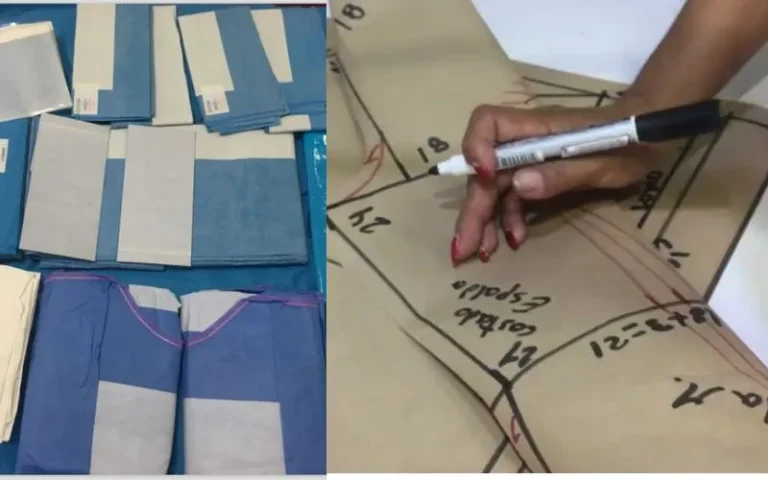
Self-drawn patterns allow you to create according to your own ideas, suitable for specific needs and have high uniqueness. But this requires design knowledge, experience, and significant time investment to create a complete pattern set.
II. Popular Types of Fabric Bag Patterns
1. Basic Tote Bag Patterns
Tote bags are the simplest and most suitable designs for beginners. Basic tote patterns typically include three main components: rectangular bag body, two handles, and bag bottom (if applicable).
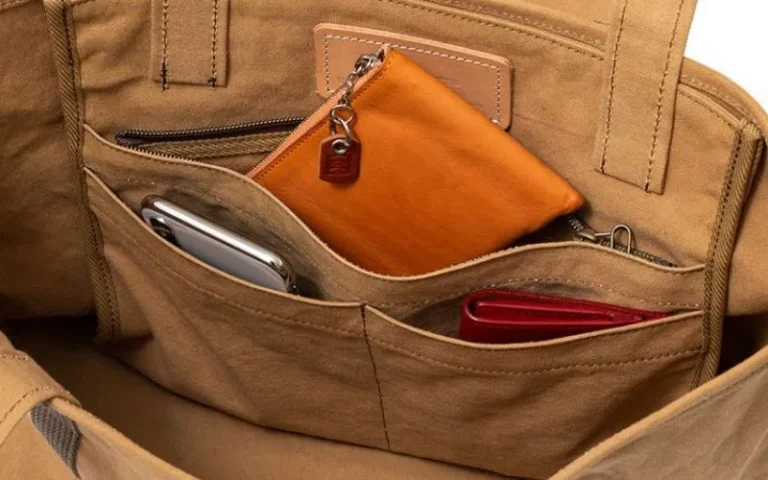
Notable characteristics of tote patterns:
- Simple structure: Only 2-3 main pattern pieces needed
- Easy to join: Seams are mainly straight lines
- Flexible in size: Can be adjusted according to usage needs
- Suitable for many fabric types: From thick canvas to thin cotton
Popular tote bag sizes:
- Small size: 25cm x 30cm (suitable for phone and wallet)
- Medium size: 35cm x 40cm (work bag, school bag)
- Large size: 45cm x 50cm (shopping bag, beach bag)
2. Crossbody Bag Patterns with Zippers
Crossbody bags require higher precision due to many complex details. This pattern type includes: bag body, bag flap, bag bottom, strap, and zipper details.
Crossbody bag pattern components:
- Main bag body: Usually oval or rounded rectangle
- Bag flap: Can be fold-over flap or zippered flap
- Adjustable strap: 100-140cm length
- Sub-pocket details: Small compartments inside or outside
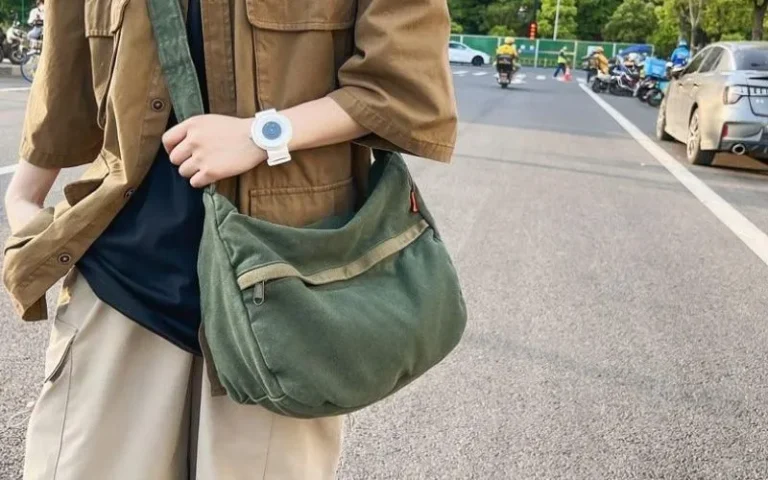
Important Note: Crossbody bag patterns need precise calculation of strap attachment positions to ensure balance when used.
3. Office Handbag Patterns
Office handbags require high professionalism in both design and sewing techniques. This pattern type typically has complex structure with many compartments and decorative details.
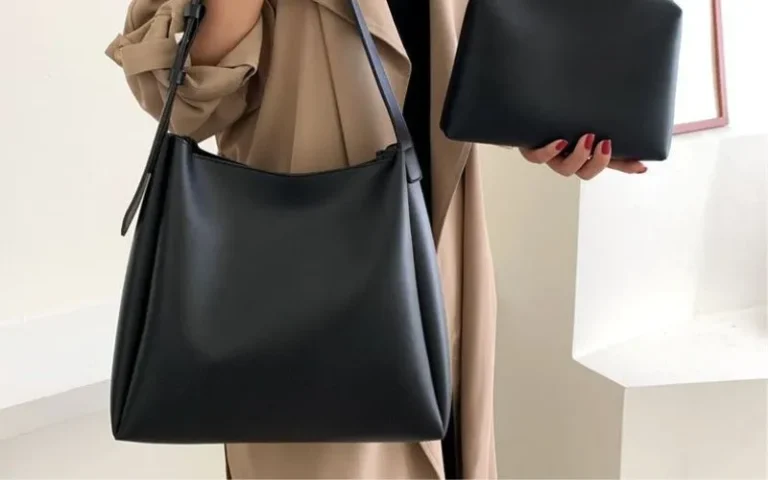
Office bag pattern characteristics:
- Rigid interfacing: Helps bag maintain firm shape
- Multiple compartments: Laptop compartment, document compartment, accessory compartment
- High-quality finishing details: Metal clasps, key hooks, name tags
- Ergonomic design: Padded handles, balanced center of gravity
4. Box Bag Patterns with Rigid Bottom
Box bags are three-dimensional structured bags requiring precise joining techniques. This pattern type is typically divided into many small pieces for easy cutting and sewing.

Box bag pattern structure:
- 6 main sides: Front, back, 2 sides, bottom, lid
- Joining pieces: Corner joints, reinforcement edges
- Closure details: Snap buttons, magnetic clasps, or zippers
- Accessories: Bag feet, hanging hooks, logos
III. Necessary Materials and Tools
1. Choosing Suitable Fabric (Canvas, Cotton, Nylon)
Canvas fabric is the top choice for tote bags and durable handbags. With weight from 300-600 gsm, canvas has good load-bearing capacity and maintains stable shape. Especially, cotton canvas is environmentally friendly and highly aesthetic.
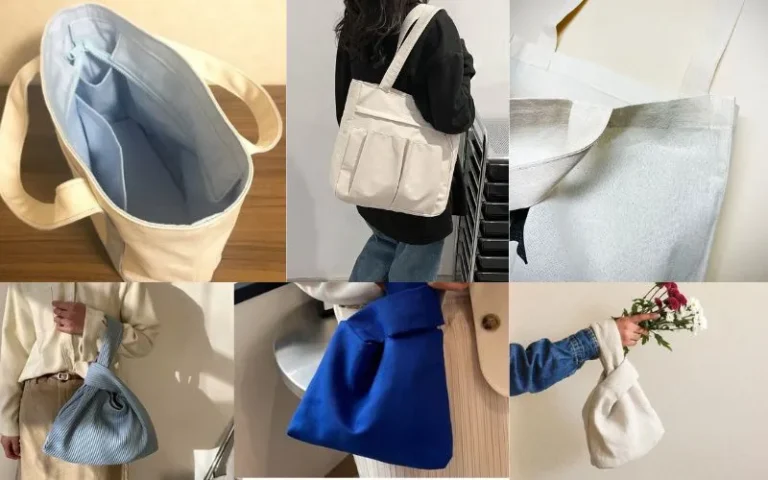
Cotton fabric is typically used for bags with light, feminine designs. Cotton has advantages of easy sewing, easy washing, and comes in diverse colors and patterns. However, choose cotton with appropriate thickness (minimum 200 gsm) to ensure durability.
Nylon fabric (Nylon ripstop) is suitable for sports bags, travel bags thanks to water resistance and lightness. Nylon has high durability, doesn’t tear easily, and is easy to clean.
2. Professional Pattern Cutting Tools
Basic tool set includes:
Professional fabric scissors: Need sharp blades and appropriate length (20-25cm). Quality scissors help cut precisely and prevent fabric fraying.

Rotary Cutter: Especially useful for cutting long straight lines and cutting multiple fabric layers simultaneously. Combine with metal ruler for high precision.
Metal ruler: 50-100cm length, helps draw straight lines accurately and serves as cutting guide for rotary cutter.
Tailor’s chalk or fabric marking pen: To mark cutting lines and reference points. Choose types that are easy to erase and don’t smudge colors.
Self-healing cutting mat: A1 or A0 size, helps protect blade and increase tool life.
3. Bag Sewing Accessories: Zippers, Interfacing, Thread
Zippers need to be selected according to appropriate length and type:
- Nylon zippers: Light, inexpensive, suitable for everyday bags
- Metal zippers: Durable, luxurious, suitable for premium bags
- Waterproof zippers: For sports bags, travel bags

Adhesive interfacing helps bags have stiffness and maintain shape:
- 1-2mm interfacing: For light, flexible bags
- 3-4mm interfacing: For structured bags, office bags
- 5mm+ interfacing: For box bags, requiring high stiffness
Sewing thread should be selected according to color and durability:
- Polyester thread: Colorfast, non-shrinking
- Cotton thread: Natural, suitable for cotton fabrics
- Colors: Choose matching tones or contrasting to create accents
See Also:
- Bag sewing mesh not only supports stable shape maintenance but also creates unique fashion effects, enhancing durability and aesthetics for bag products
- Backpack and bag sewing worker salary to have an overview of income in industrial sewing profession
IV. Fabric Bag Pattern Templates
1. Basic Tote Bag Size Pattern Collection
Tote bag pattern size S (25x30cm):
- Suitable for making accessory bags or gift bags
- Recommended fabric: Cotton 200-300gsm
- Sewing time: 1-2 hours for experienced persons
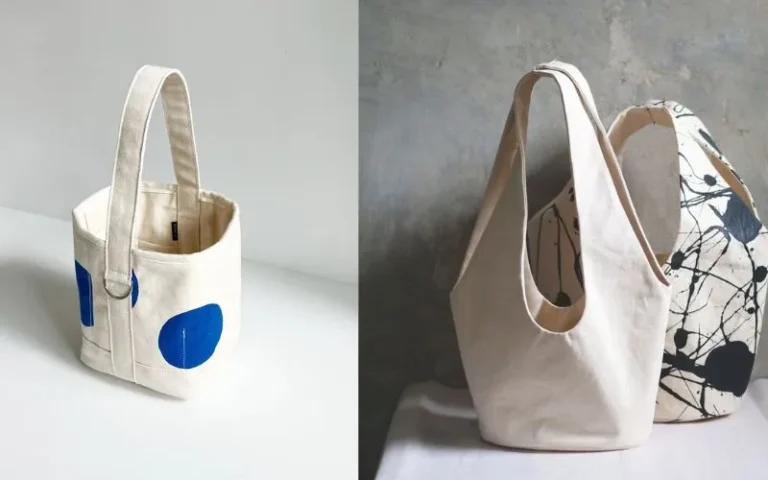
Tote bag pattern size M (35x40cm):
- Most versatile, suitable for school, work
- Can add inner pocket for compartments
- Recommended fabric: Canvas 300-400gsm
Tote bag pattern size L (45x50cm):
- For large storage needs
- Need to reinforce handles to bear weight
- Recommended fabric: Canvas 400-600gsm
2. Fashion Crossbody Bag Pattern Templates
Mini crossbody bag: Size 15x20cm, suitable for carrying phone and small wallet. Simple design but needs attention to strap ratio.
Medium crossbody bag: 20x25cm, can add zipper compartment outside. Suitable for outings, travel.

Multi-purpose crossbody bag: 25x30cm, has multiple compartments and flexible strap adjustment capability.
3. Professional Office Handbag Patterns
Design Characteristics:
- Laptop compartment with shock-absorbing lining
- Spacious document compartment, flat
- Sub-pocket for office accessories
- Padded handles and auxiliary shoulder strap
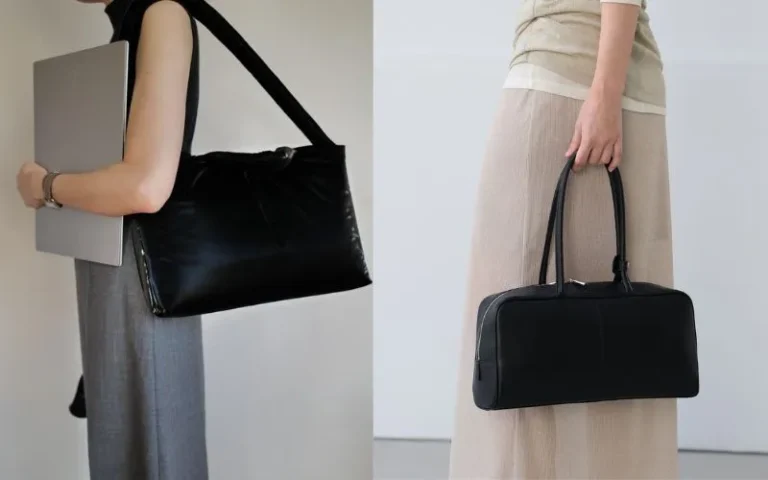
Standard dimensions: 40x30x10cm, suitable for 14-15 inch laptops and A4 documents.
4. Size Customization Guide According to Needs
Basic Size Calculation Formula:
To customize bag size, you need to determine usage purpose and measure dimensions of items to be carried in the bag.

Expansion Formula:
- Bag width = Item width + 5-10cm
- Bag height = Item height + 5-10cm
- Bag depth = Item depth + 2-5cm
Mastering the technique of using fabric bag sewing patterns is the key to creating high-quality handmade products. With knowledge from this guide, you now have enough foundation to develop professional bag sewing skills and create unique designs. Please contact hotline 0909.938.333 for us to consult on custom bag orders at Hop Phat factory.