

 Tiếng Việt
For manufacturing factories, owning accurate backpack sewing patterns is the key factor determining quality and productivity. Perfect pattern sets enable fast, consistent cutting and sewing processes while minimizing errors. Hop Phat Manufacturing will analyze in-depth the design process and pattern applications in mass production, delivering superior competitive advantages.
I. Fundamentals of Backpack Pattern Making
1. Concept and Role of Pattern Making in Backpack Production
Backpack pattern making is the design template drawn on paper or digitally designed, including necessary details to create a complete backpack. It’s like a “detailed blueprint” of a house before construction. Each line, each dimension is carefully calculated to ensure the final product is beautiful and functional.

Common types of patterns include:
- Basic patterns
- Modified patterns
- Custom patterns
The role of accurate patterns is extremely important. An accurate pattern is the foundation for creating beautiful, balanced, and durable backpacks. If patterns aren’t accurate, no matter how good the sewing technique, the final product won’t meet requirements. That’s why professional sewers always spend time creating accurate patterns before starting to cut fabric.
2. Popular Backpack Types and Technical Specifications
Each backpack type has distinct technical characteristics requiring different approaches in pattern making process.
Student backpacks typically have simple designs with 1-2 main compartments, front side pockets and require sturdy strap sewing. High durability requirements but don’t need too many complex details.
Travel and sports backpacks need to focus on large storage capacity, many side pockets and reinforced strap systems to withstand heavy weight. Pattern making for these backpacks is usually more complex, requiring careful calculations about weight balance.
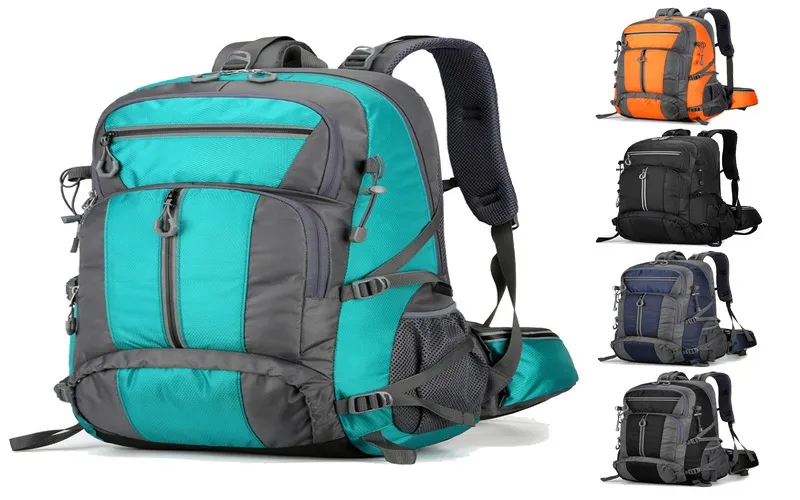
Laptop and office backpacks need specialized padded compartments protecting electronic devices, compact, elegant designs and usually have small compartments for accessories. Accuracy in pattern making for these backpacks is very high.
Fashion backpacks focus on aesthetic elements, usually have decorative details, special colors and materials. Pattern making for these backpacks requires creativity and keeping up with fashion trends.
II. Essential Tools and Materials
1. Design and Pattern Making Tools
To create quality backpack patterns, you need to prepare these tools:
|
Basic Tools |
Specialized Tools |
Digital Tools |
|
Measuring tape |
Curved ruler |
Computer |
|
Straight ruler |
Triangle ruler |
Design software |
|
Pencil |
Tracing wheel |
Scanner |
|
Eraser |
Compass |
Printer |
|
Kraft paper |
Tracing paper |
Drawing tablet |
Manual pattern making method is still preferred by many for flexibility and easy adjustment. However, pattern digitization is becoming a trend with advantages like easy storage, sharing and quick editing. Design software like Illustrator or specialized apparel industry software makes pattern making more professional.
2. Suitable Materials for Each Backpack Type
Material selection not only affects appearance but also determines backpack durability and functionality. Below are popular fabric types:
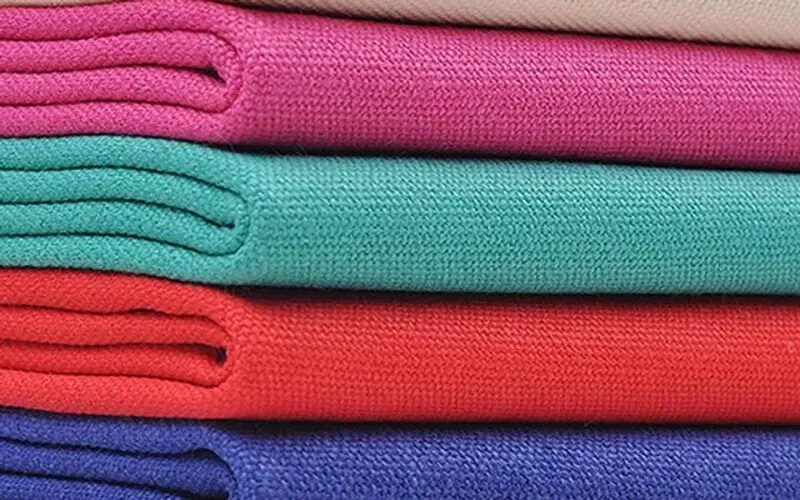
Nylon fabric: Lightweight, durable, good water resistance, suitable for travel and sports backpacks.
Canvas fabric: Thick, sturdy, moderately stiff, suitable for fashion backpacks and student backpacks.
Oxford fabric: Combines advantages of both nylon and canvas, high durability, suitable for multi-purpose backpacks.
Denim fabric: Thick, durable, creates personal style, suitable for fashion backpacks.
Besides main fabric, you need to prepare accessories like:
- Quality zippers (should choose YKK or equivalent)
- Buckles, plastic or metal hooks
- High durability webbing straps
- Foam padding for cushioning layers
- Inner lining fabric (usually thin polyester)
III. Basic Backpack Pattern Making Process
1. Measuring and Calculating Pattern Dimensions
The first and most important step in backpack pattern making process is determining overall dimensions. You need to decide:
- Backpack height (usually 40-50cm for adults)
- Width (usually 30-35cm)
- Depth/thickness (usually 15-20cm)
After having overall dimensions, you’ll calculate component proportions. A general rule is:
- Main body occupies about 60-70% overall
- Side pockets occupy about 20-30%
- Shoulder straps occupy about 10-20%
Pay special attention to seam allowances. Typically, you need to add:
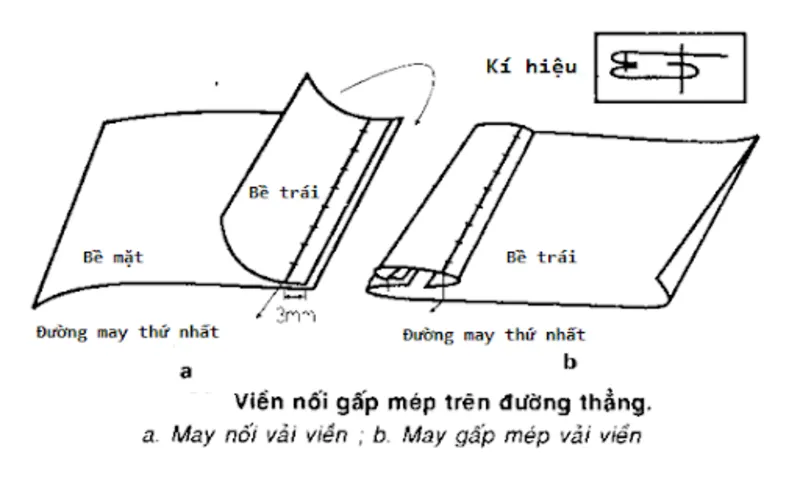
- 1-1.5cm for regular seams
- 2-3cm for seams with edges or requiring high sturdiness
- 3-5cm for folded edges or binding
2. Detailed Pattern Creation Steps
Main body pattern is the most important part. You need to draw front, back and backpack bottom. Note that the back (contacting wearer’s back) usually has slight curves to hug back better.

Side pocket and hip pocket patterns need position calculations for harmony and convenience when using. Side pockets usually placed on front, occupying about 1/2 to 2/3 height of main body.
Flap and bottom patterns require high accuracy to ensure when assembled to main body they don’t shift or wrinkle. Flaps usually have semi-circular or rounded rectangular shapes.
Strap and handle patterns are indispensable parts. Shoulder straps usually 4-5cm wide, about 60-70cm long (adjustable). Handles usually 2.5-3cm wide, 15-20cm long.
IV. Backpack Component Sewing Techniques
1. Main Body and Side Pocket Sewing Techniques
Sewing lined bags makes backpacks more elegant and durable. Basic process as follows:
- Sew main fabric layer and lining layer separately
- Turn two layers into each other, leaving right side facing out
- Sew edges or bias to finish
Zipper pocket sewing technique requires meticulousness:
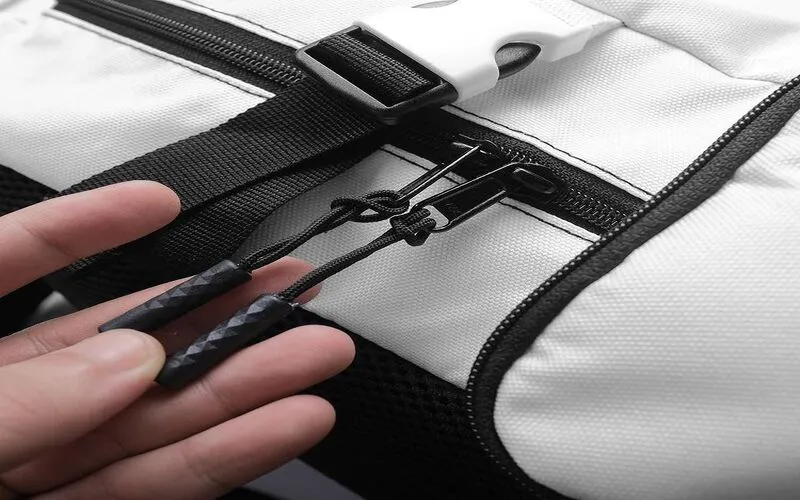
- Place zipper between two fabric pieces (fabric right side facing zipper)
- Sew to secure
- Turn fabric and sew edge line if needed
Corner and edge treatment is step determining product professionalism:
- Trim excess fabric at corners (leave 2-3mm)
- Turn right side out and use round stick or chopstick to adjust corners
- Iron flat and sew edge line 2-3mm from edge
2. Strap and Complex Detail Sewing Techniques
Sewing comfortable, sturdy straps is factor determining backpack usage experience:
- Fold strap webbing in half, place foam padding in middle
- Sew around edges
- Sew additional parallel line 1-2cm apart to create ridges, helping straps not twist
Reinforcing stress points very important to increase backpack durability:
- Use X-shaped or square-shaped seams at strap connection points with backpack body
- Can use reinforcement pieces made of leather or thick fabric at connection points
Sewing back padding helps wearer feel more comfortable:
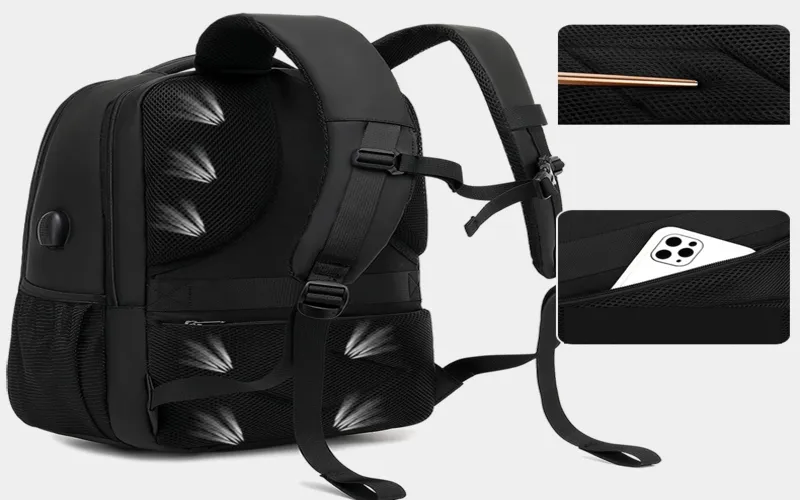
- Prepare padding layer (usually 1-2cm thick foam)
- Wrap soft, breathable fabric layer outside
- Sew to secure to back of backpack with mesh or parallel line pattern
V. Advanced Backpack Pattern Making Techniques
1. Waterproof Backpack Design and Pattern Making
To create effective waterproof backpacks, material selection is key. Besides traditional waterproof fabrics like nylon, PU-coated Oxford fabric, you can use modern technical fabrics like Gore-Tex or TPU fabric.
Watertight seam treatment techniques include:
- Use heat-sealing tape to seal all seams inside
- Apply overlock sewing technique combined with waterproof thread
- Apply thin silicon glue layer at important seams
Waterproof flap design needs attention to:

- Create cover section for zipper
- Design flap wide enough to cover backpack opening
- Add details like drainage grooves at appropriate positions
2. Multi-Functional, Multi-Compartment Backpack Pattern Making
Reasonable compartment design is key to creating multi-functional backpacks:
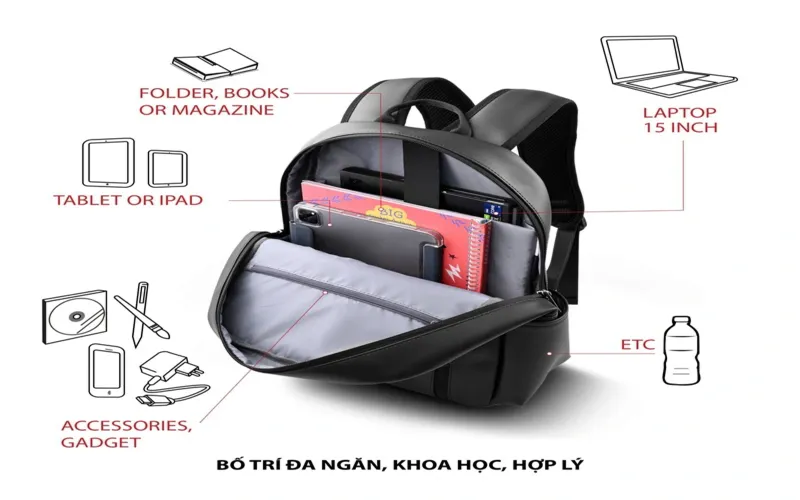
- Divide interior space into compartments with sizes suitable for common items
- Create small zippered compartments for storing valuable items
- Design special compartments for laptops, cameras or electronic devices
Weight and balance calculations help backpacks wear more comfortably:
- Place heavy item compartments close to wearer’s back
- Distribute weight evenly between two sides
- Design chest or waist straps to reduce shoulder load
Optimizing usage space is art in modern backpack design:
- Create compartments that can expand/collapse
- Design external mesh pockets for water bottles or quickly accessed items
- Utilize inside of backpack flap to create additional flat pockets
VI. Common Errors and Solutions
1. Identifying and Handling Pattern Making Errors
Disproportionate ratio errors often occur when lacking experience:
- Signs: Finished backpack looks asymmetrical, bottom too large or too small compared to body
- Solution: Always draw overall sketch first, then draw each part in detail

Missing seam allowance/spacing errors are most common:
- Signs: When sewing, fabric is tight or wrinkled, not enough space to sew
- Solution: Always add minimum 1cm seam allowance, for load-bearing parts should leave 1.5-2cm
Quick inaccurate pattern adjustment methods:
- Create test sample with cheap fabric (muslins)
- Mark positions needing adjustment
- Edit pattern and test again until satisfied
2. Troubleshooting Sewing Process Errors
Handling uneven seams:
- Use presser foot appropriate for fabric type
- Adjust slower sewing speed at curved sections
- Use pins to secure fabric before sewing
Fixing sagging fabric:

- Check thread tension on sewing machine
- Use “easing” technique when sewing two fabric pieces with different curves
- Iron fabric flat before sewing
Repairing easily torn weak points:
- Reinforce by double or triple sewing at connection points
- Use reinforcement patch inside
- Apply zigzag sewing technique or reinforced edge sewing
VII. Secrets to Increasing Efficiency and Quality
1. Optimizing Production Process
Pattern arrangement saving fabric is important skill helping reduce costs:
- Place large pieces first, then fit small pieces into gaps
- Pay attention to fabric grain line direction to ensure product durability
- Utilize leftover fabric to make accessories like hanging loops, name tags
Fast, accurate cutting methods:
- Use specialized sharp scissors
- Secure fabric and pattern with weights or clamps
- Cut from outside inward, starting with straight lines
Organizing efficient sewing process:

- Group similar pieces and sew simultaneously
- Complete each part separately before assembling to main body
- Leave complex stages for most concentrated times
2. Finishing and Quality Inspection
Quality backpack evaluation criteria:
- Seams straight, even, not sagging threads
- Symmetrical, balanced details
- Zipper operates smoothly
- Straps sturdy, not twisted
- When placed on flat surface, backpack stands firmly without tilting

Product inspection process should be performed in order:
- Overall inspection: shape, dimensions, balance
- Detail inspection: seams, zippers, straps
- Function inspection: try wearing, putting items in compartments
Product finishing handling methods:
- Trim excess threads cleanly
- Iron flat parts that can be ironed
- Clean thoroughly and store properly
Overall, a perfect backpack starts from an accurate pattern set. That’s why you cannot skip using professional backpack pattern making. Quality patterns give you confidence in every cut, every stitch, creating beautifully finished, error-free products. Contact us immediately to learn about quality custom backpack sewing services.