

 Tiếng Việt
How many parts does a bag have is a question many people are interested in when wanting to learn about this product’s structure. According to statistics from Hop Phat medical bag manufacturing factory, a standard bag consists of 5-8 main parts depending on the style. This article will analyze in detail each component that makes up a complete bag.
I. Why Do You Need to Understand Bag Structure?
1. Helps Choose High-Quality Bags
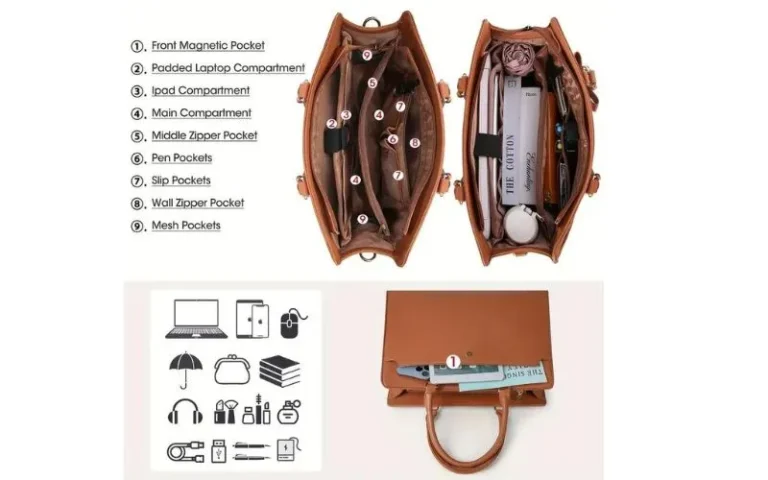
Mastering how many main parts a bag has helps you accurately assess product quality. When you know each structural detail, you can check the durability of seams, the quality of metal accessories, and overall finishing.
2. Accurately Assess Product Value
Each part of a bag has its own value. Genuine YKK zippers cost 5 times more than regular zippers. Real cowhide leather has much higher durability than synthetic leather. Understanding the structure helps you avoid being overcharged by retailers.
3. Effective Storage and Use
Knowing how many parts a bag has and the function of each part will help you use it correctly. For example, you shouldn’t overload the handles, or you need to maintain zippers by applying oil periodically.
II. 7 Main Parts of a Bag
1. General List
Hop Phat introduces 7 basic parts that every bag has:
| Part | Function | Cost Proportion |
|---|---|---|
| Bag body | Main storage | 40-50% |
| Bag opening | Opening/closing | 15-20% |
| Handles | Carrying | 20-25% |
| Lock | Protection | 10-15% |
| Rings | Connection | 3-5% |
| Base feet | Bottom protection | 2-3% |
| Accessories | Decoration | 1-5% |

2. Role of Each Component
Each detail has its own meaning. The bag body determines capacity and shape. Handles affect how it’s used. The lock ensures safety for items inside.
III. Bag Body – The Most Important Part
1. Front and Back Body
The bag body is the part occupying the largest area, including the front and back faces. Body design determines the overall style of the product. Office bags usually have square bodies, while street bags can have round or oval bodies.
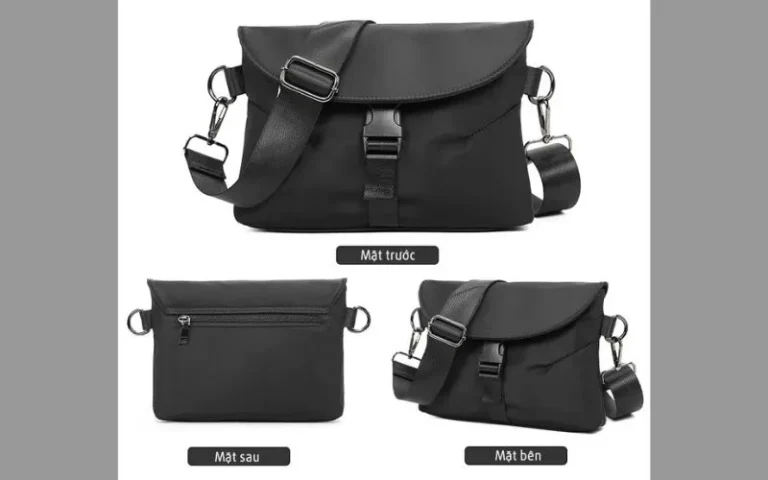
Body materials vary from genuine leather, synthetic leather to canvas fabric. Real cowhide leather has the highest durability but is expensive. Synthetic leather is cheaper but has shorter lifespan. Canvas fabric suits casual, youthful styles.
2. Side Panels and Bottom
Side panels connect the front and back, creating depth for the bag. The bottom bears the most weight so needs careful reinforcement. Many premium products use double leather bottom to increase durability.

3. How to Evaluate Body Quality
Check if seams are even and firm. Test leather elasticity by pressing. Real leather will have natural elasticity and characteristic smell. Fake leather is usually stiff and has chemical smell.

IV. Bag Opening and Lock System
1. Open Mouth Design
The bag opening can be designed open or with a closing system. Open bags are convenient to use but less secure. Many high-end fashion bags choose open mouth design to create elegance.

2. Common Lock Types
Zipper locks: Most common, easy to use, highly durable if choosing reputable brands. YKK is the world’s leading zipper brand.
Snap locks: Commonly seen on classic bags, create characteristic “click” sound when opening and closing. Durable but somewhat bulky.

Magnetic locks: Modern, opens and closes smoothly, suitable for premium women’s bags. However, may be affected by strong magnetic fields.
3. Criteria for Choosing Quality Locks
Good locks must open and close smoothly, without jamming. Metal doesn’t rust after use. Zippers should be tested multiple times to check if they slip.
V. Handles – The Soul of the Bag
1. Hand Carry Handles
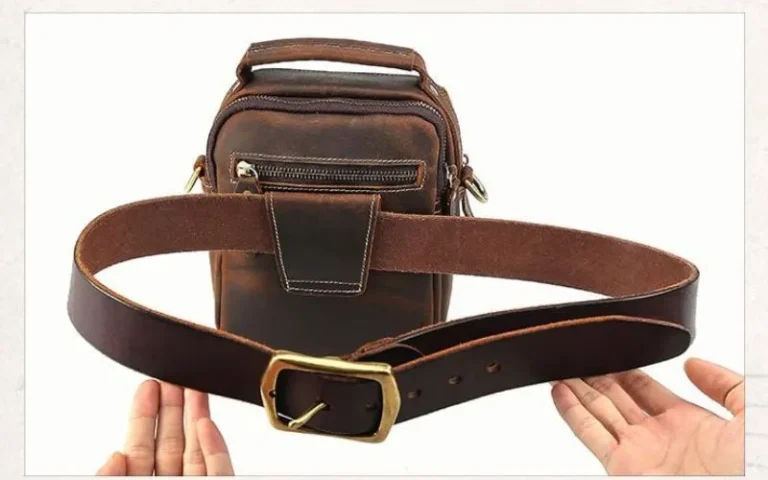
Carry handles are short, about 15-25cm long, suitable for hand carrying or tucking under arm. Materials are usually genuine leather or synthetic leather, can be padded for increased comfort.

2. Crossbody Straps
Crossbody straps are 80-120cm long, adjustable in length as needed. This design helps free both hands, suitable for frequent movement.
3. Handle Materials
Genuine leather: Durable, ages beautifully but needs careful maintenance.
Metal chain: Luxurious, doesn’t break but can be heavy and stiff.
Canvas fabric: Light, comfortable, easy to clean but less luxurious.
PU leather: Cheap, diverse colors but short lifespan.
VI. Rings and Lobster Clasps – Technical Accessories
1. D-Rings
D-rings are the most common type, D-shaped, easy to hook straps. Usually made from stainless steel or gold-plated brass. Quality D-rings must withstand minimum pulling force of 50kg.

2. Round Rings and Rectangular Rings
Round rings are less common, often used for sports bags. Rectangular rings have larger contact area, distribute force more evenly.

3. Lobster Clasps (Dog Clips)
Lobster clasps are small but important details, connecting between rings and straps. Made from premium metal, with spring mechanism to open and close. Good lobster clasps must open and close smoothly and lock tightly.

VII. Base Feet and Bag Lining
1. Function of Base Feet
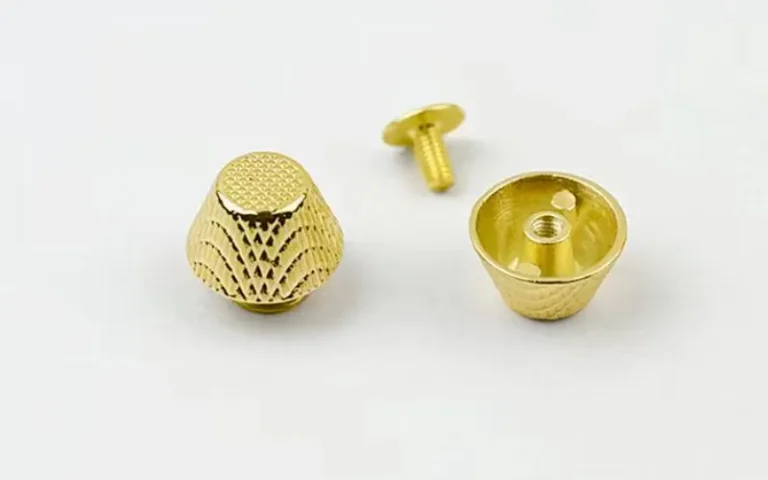
Base feet protect the bag bottom from scratches when placed on the floor. Especially important for genuine leather bags because leather is easily damaged when rubbing against rough surfaces.
2. Types of Base Feet
Metal base feet: Most durable but may leave marks on wooden floors.
Plastic base feet: Light, don’t scratch floors but less durable.
Rubber base feet: Good anti-slip, don’t make noise.
3. Bag Lining and Sub-compartments
Bag lining protects the interior, easy to clean. Usually made from polyester or cotton fabric. Sub-compartments help organize items, increase practicality.
Through this article, you clearly understand how many parts a bag has and the function of each component. This knowledge helps you choose quality products suitable for your needs. Hop Phat is always ready to provide detailed consultation on bag structure. Contact hotline 0909.938.333 now for support and special offers!